
 By Mobi Roller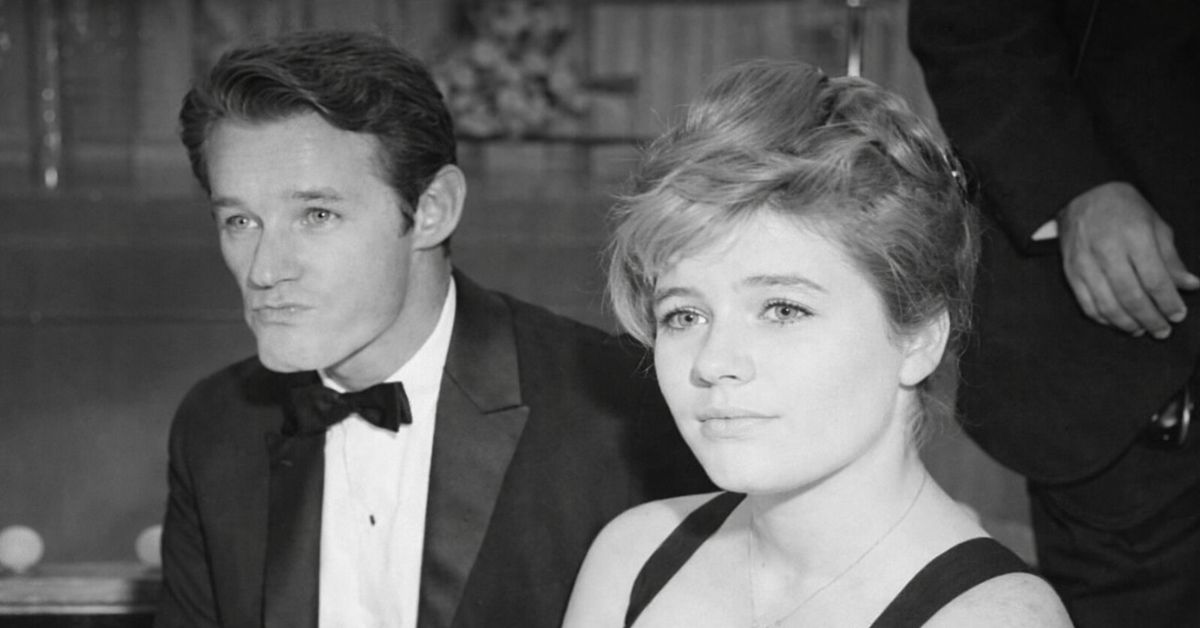
Michael Tell is one of those figures whose name surfaces almost exclusively in connection with someone far more famous — in his case, the beloved Oscar-winning actress Patty Duke. Yet to reduce Michael Tell to merely a footnote in Patty Duke’s story would be to miss a genuinely fascinating human biography: a private man who drifted into one of Hollywood’s most puzzling marriages, fathered a child at the center of a two-decade paternity mystery, and lived out his final years in quiet obscurity in Las Vegas before passing away in April 2025 at the age of 80.
Thank you for reading this post, don't forget to subscribe!This in-depth profile covers everything you need to know about Michael Tell — his early life, his brief but consequential marriage to Patty Duke, the complex paternity question surrounding actor Sean Astin, his life after the spotlight, and the circumstances of his death.
Who Was Michael Tell? — Quick Profile Summary
| Detail | Information |
|---|---|
| Full Name | Michael Tell |
| Nickname | Mike |
| Date of Birth | Circa 1944–1945 |
| Date of Death | April 9, 2025 |
| Age at Death | 80 years |
| Birthplace | United States of America |
| Nationality | American |
| Ethnicity | Caucasian |
| Profession | Rock Music Promoter, Journalist |
| Famous For | Being Patty Duke’s third husband |
| Marriage Duration | 13 days (1970) |
| Ex-Wife | Patty Duke (Anna Marie Duke) |
| Notable Connection | Father figure to Sean Astin |
| Last Known Residence | Las Vegas, Nevada |
Michael Tell’s Early Life and Background
Very little is publicly known about Michael Tell’s early years, and that obscurity is largely by his own design. Born in the mid-1940s in the United States, Tell grew up outside the glare of the entertainment world even as he worked on its fringes. Unlike the celebrities and performers he would eventually orbit, Tell had no desire for fame and took deliberate steps throughout his life to remain a private person.
What we do know is that Tell was intellectually curious from a young age. He pursued interests in writing and journalism, working as a reporter and contributor to various publications during the 1960s — a period of enormous cultural upheaval in America when the counterculture, the civil rights movement, and the explosion of rock music were reshaping the nation. These journalistic interests naturally drew him toward the music world, and by the late 1960s he had transitioned into the role of rock music promoter, helping to organize concerts and manage the careers of emerging artists.
Tell’s work as a promoter placed him squarely inside the chaotic world of 1960s and 70s rock music, but he was never a headline figure. He was a backstage operator — the kind of person who makes events happen but rarely appears in photographs. Colleagues from that era described him as intelligent, driven, and deeply private. He socialized in entertainment circles, which is precisely how he eventually crossed paths with one of America’s most celebrated actresses.
Patty Duke: A Brief Introduction to the Woman Who Changed Michael Tell’s Life
To understand Michael Tell’s story, it helps to understand the woman he married. Anna Marie Duke — known to the world as Patty Duke — was already a bona fide American icon by the time she and Tell met. Born in 1946 in Queens, New York, Duke had been a child star of extraordinary magnitude. She won the Academy Award for Best Supporting Actress in 1963 for her portrayal of Helen Keller in The Miracle Worker, making her the youngest person at the time to receive an Oscar. She also starred in her own television sitcom, The Patty Duke Show, which ran from 1963 to 1966 and made her a household name across America.
Behind the scenes, however, Duke’s life was far more turbulent than her cheerful TV persona suggested. She had endured years of psychological manipulation and abuse at the hands of her early managers, the Rosses, who controlled nearly every aspect of her life from childhood. By the late 1960s and into the 1970s, Duke was struggling with what would later be diagnosed as bipolar disorder — a condition then poorly understood and rarely discussed publicly. She experienced manic episodes, erratic behavior, and emotional instability that complicated her personal relationships enormously.
It was during one of these turbulent periods that Michael Tell entered her life.
How Michael Tell and Patty Duke Met
By 1970, Patty Duke had already been married twice. Her first marriage, to Harry Falk Jr. in 1965, ended in divorce in 1969. She was emotionally raw and, by her own later accounts, in the grip of an untreated manic episode when she encountered Michael Tell through mutual connections in the entertainment industry.
Tell and Duke were introduced through shared professional acquaintances — the natural result of both moving through overlapping entertainment and media circles. Duke, who was 23 at the time, was drawn to Tell’s intelligence and stability. Tell, for his part, appears to have genuinely cared for Duke during a period when she was extremely vulnerable.
What neither of them could have fully recognized at the time was the extent to which Duke’s undiagnosed mental health condition was shaping her decision-making. Duke would later reflect with considerable candor that her state of mind during this period was deeply compromised, and that the whirlwind courtship with Tell was a product of that instability rather than a considered romantic choice.
The 13-Day Marriage: One of Hollywood’s Most Unusual Unions
On June 26, 1970, Patty Duke and Michael Tell were married. The union shocked those around them — not only because it happened so quickly, but because few people in Duke’s circle had even known she and Tell were seriously involved.
What made the marriage truly remarkable, and what has ensured its place in Hollywood trivia ever since, is its duration: just 13 days. The couple separated almost immediately after the wedding, and the marriage was annulled shortly thereafter.
In her 1987 autobiography Call Me Anna, Duke addressed the marriage with raw honesty. She wrote that she had not been thinking clearly when she married Tell, that the union was a desperate attempt to find emotional stability at a time when her inner world was in chaos. She did not portray Tell as a villain or even as a bad partner — rather, she acknowledged that the marriage was a symptom of her own unmet psychological needs. She described it as one of the most impulsive decisions of a life that, during that era, was characterized by impulsive decisions.
For his part, Michael Tell never publicly commented on the marriage at length. This silence was entirely consistent with his character — he was not a man who sought media attention or positioned himself as a celebrity-adjacent figure. He processed the experience privately and moved on.
The annulment meant the marriage was legally treated as though it had never occurred — which added yet another layer of complexity to the question that would dominate both Tell’s and Duke’s stories for decades: the question of Sean Astin’s paternity.
The Paternity Mystery: Sean Astin and His Three Potential Fathers
Perhaps no aspect of Michael Tell’s connection to Patty Duke has generated more public fascination than the question of who fathered her son Sean. Sean Astin, born on February 25, 1971, in Santa Monica, California, is today one of Hollywood’s most recognized actors, beloved for his roles as Samwise Gamgee in Peter Jackson’s The Lord of the Rings trilogy and as Bob Newby in Stranger Things. But before he was famous, he was at the center of one of Hollywood’s most convoluted paternity stories.
Because Patty Duke had been involved with multiple men around the time of her marriage to Tell, the question of Sean’s biological parentage was genuinely uncertain. The three men most frequently discussed as possible fathers were:
Michael Tell — Duke’s third husband, whose brief marriage to her overlapped with the period of Sean’s conception. Because of the timing, Tell was for many years listed as Sean’s presumed father, and Sean carried awareness of this possibility throughout his childhood and young adult years.
Desi Arnaz Jr. — The son of Lucille Ball and Desi Arnaz, and a prominent figure in his own right. Duke had been in a relationship with Arnaz Jr. around this same period, and when Sean was approximately 14 years old, Duke reportedly told him that Arnaz was his biological father. Sean subsequently developed a relationship with Arnaz Jr. under that assumption.
John Astin — The actor best known for playing Gomez Addams in The Addams Family television series. Duke married Astin in 1972, and he legally adopted Sean, giving the boy his surname. For much of Sean’s public life, John Astin was the father figure he was primarily associated with, and Sean has spoken warmly of him throughout his career.
The confusion deepened and then resolved in 1995 when Sean Astin, now an adult with questions of his own, submitted to a DNA paternity test. The results were unambiguous: Michael Tell was Sean Astin’s biological father.
This revelation came after years of uncertainty. Sean himself has discussed the emotional complexity of growing up with multiple potential fathers and ultimately learning the truth through a laboratory test rather than through family conversation. In various interviews over the years, he has acknowledged having a cordial, if limited, relationship with Michael Tell following the confirmation of their biological connection.
Michael Tell’s response to the DNA confirmation was characteristically understated. He did not seek media attention, did not pursue a public relationship with Sean, and did not attempt to insert himself into the narrative of a young man who had built his identity and family connections around other father figures. Those who knew Tell suggest this restraint was not indifference but rather a form of respect — an acknowledgment that Sean had a life and a family that did not require disruption.
Michael Tell’s Life After Patty Duke
Following the annulment of his marriage to Patty Duke in 1970, Michael Tell returned to the life he had always preferred: one lived largely outside public view. He continued to work in and around the music and entertainment industries for a period, leveraging his experience as a promoter and journalist, but he never achieved the kind of celebrity that might have attracted ongoing media scrutiny.
Tell did not remarry after his brief union with Duke. Whether this was by choice or circumstance is unknown, but those who knew him in later life described him as self-sufficient and settled in his solitude. He relocated to Las Vegas at some point in the later decades of his life — a city that attracts those who work in entertainment and media, but also a city large and anonymous enough to allow a private life.
He maintained a low profile throughout the 1980s, 1990s, and 2000s, surfacing in public consciousness only when journalists or biographers revisiting Patty Duke’s life sought to trace the threads of the 1970 marriage. In those contexts, Tell was typically described as unavailable for comment, which was consistent with the posture he had maintained since the annulment.
The confirmation in 1995 that he was Sean Astin’s biological father briefly renewed media interest in Tell, but he navigated that moment much as he had navigated every other — quietly. He and Sean reportedly established some form of contact in the years following the DNA test, though neither man made a public statement about the nature or depth of their relationship.
Patty Duke’s Later Life and Death
While Michael Tell lived his quiet life in Las Vegas, his famous ex-wife continued to be a prominent and beloved public figure. Patty Duke went on to marry twice more after Tell — first to John Astin in 1972, and then to Michael Pearce in 1986, a marriage that lasted until her death.
In the latter half of her life, Duke became one of the most prominent advocates for mental health awareness in America. After receiving her bipolar disorder diagnosis in the early 1980s, she wrote openly about her experiences, published her memoir Call Me Anna in 1987, and used her celebrity to destigmatize mental illness at a time when such conversations were far less common than they are today. She testified before Congress, partnered with mental health organizations, and spoke at countless events about the importance of treatment and compassion for those living with psychiatric conditions.
Duke was also active in political causes, serving as president of the Screen Actors Guild from 1985 to 1988, and she continued acting in both television movies and series well into the 2000s.
Patty Duke died on March 29, 2016, at the age of 69. The cause of death was sepsis resulting from a ruptured intestine. Her son Sean announced her passing on Instagram with a deeply moving tribute that acknowledged both her extraordinary professional achievements and her profound personal struggles. The post described her as a devoted wife, mother, grandmother, and champion for mental health, and it concluded with the tender observation that she had moved on to a better place.
Duke’s death prompted an enormous outpouring of tributes from across the entertainment industry and from the many people whose lives she had touched through her mental health advocacy. She remains one of the most admired figures of her generation.
Michael Tell’s Death in April 2025
Michael Tell outlived his famous ex-wife by nearly nine years. According to his obituary published in the Las Vegas Review-Journal, Tell passed away peacefully on April 9, 2025, at the age of 80. The specific cause of death was not publicly disclosed in accordance with the privacy preferences that had defined his entire adult life.
The news of Tell’s passing was noted primarily in the context of his connection to Patty Duke and Sean Astin, which is both understandable and somewhat ironic — understandable because those associations were what made him known to the wider world, and ironic because Tell himself had spent five decades trying to be known as little as possible.
He was 80 years old at the time of his death, meaning he had lived a full life that extended well beyond the 13-day marriage that most people associate with his name. Whatever joys, challenges, relationships, and experiences filled those eight decades are largely unknown to the public, which is precisely as Michael Tell would have wanted it.
What Sean Astin Has Said About Michael Tell
Over the years, Sean Astin has addressed the question of his biological paternity in a number of interviews and in his own memoir, There and Back Again: An Actor’s Tale, published in 2004. His account of the paternity situation is nuanced and emotionally sophisticated — the reflection of a man who had time to process a complicated truth.
Sean has been clear that John Astin, his adoptive father, was his “dad” in the most meaningful sense of the word — the man who raised him, supported him, and gave him his name. At the same time, he has not expressed bitterness toward Michael Tell, acknowledging the unusual circumstances of his birth and recognizing that Tell’s absence from his life was a product of the strange situation surrounding his parents’ brief marriage rather than malice or indifference.
In various public statements, Sean has indicated that he and Tell had a cordial relationship following the DNA confirmation, though he has not characterized it as a close father-son bond. This seems appropriate given the circumstances — they were biological relatives who came to that knowledge as adults, long after their respective identities had been formed by other relationships and experiences.
Michael Tell’s Lasting Legacy
It would be easy to dismiss Michael Tell as a peripheral figure — a minor character in a much larger story whose name is remembered only because he happened to be briefly married to a famous actress. But that reading misses something important.
Michael Tell lived a life defined by intentional privacy at a time when American culture increasingly rewarded and encouraged public disclosure. In an era of reality television, social media oversharing, and relentless celebrity culture, Tell’s quiet dignity stands as a reminder that a life well-lived does not require an audience.
He was a working professional in the music and entertainment industries who made his contributions without fanfare. He handled the revelation that he had an adult biological son — a revelation that might have led other people to seek publicity, financial benefit, or emotional drama — with restraint and respect. He spent his final decades in Las Vegas, presumably surrounded by whatever relationships and routines brought him satisfaction, and he died at 80 without having sought the spotlight once.
In a strange way, Michael Tell’s most lasting legacy may be precisely his absence from the story of his own life. He is the unnamed presence in the background of Patty Duke’s narrative, the biological link in Sean Astin’s family tree, the husband whose 13-day marriage became a Hollywood legend — and through all of it, he remained, stubbornly and admirably, himself.
Frequently Asked Questions About Michael Tell
Who was Michael Tell?
Michael Tell was an American rock music promoter and journalist who became publicly known primarily through his brief 1970 marriage to actress Patty Duke. He passed away on April 9, 2025, at the age of 80.
How long was Michael Tell married to Patty Duke?
Their marriage lasted just 13 days. They wed on June 26, 1970, and the marriage was annulled shortly afterward. Patty Duke later revealed in her memoir that she was not in a sound mental state when she agreed to the marriage, which was tied to her then-undiagnosed bipolar disorder.
Is Michael Tell the biological father of Sean Astin?
Yes. DNA testing conducted in 1995 confirmed that Michael Tell is Sean Astin’s biological father. Sean’s mother, Patty Duke, had been involved with multiple men around the time of his conception, including Desi Arnaz Jr. and John Astin, which created years of uncertainty about paternity. Sean was legally adopted by John Astin, whose surname he carries.
When did Michael Tell die?
Michael Tell died on April 9, 2025, at the age of 80. According to his obituary in the Las Vegas Review-Journal, he died peacefully. The specific cause of death was not publicly disclosed.
Did Michael Tell and Sean Astin have a relationship?
Following the 1995 DNA confirmation, Sean Astin and Michael Tell reportedly established contact, though Sean has consistently described John Astin as his father in the meaningful, relational sense. The biological connection between Tell and Sean Astin was acknowledged without disrupting Sean’s primary family relationships.
When did Patty Duke die?
Patty Duke passed away on March 29, 2016, at the age of 69, from sepsis caused by a ruptured intestine.
Was Michael Tell ever married after Patty Duke?
There is no public record of Michael Tell marrying again after his annulment from Patty Duke in 1970.
Conclusion
Michael Tell lived a life that intersected with Hollywood legend at a single dramatic point — a 13-day marriage to one of America’s most iconic actresses — and then retreated from public view for the remaining five decades of his existence. That retreat was not cowardice or shame but the natural expression of a personality that valued privacy over publicity, quiet over celebrity.
His story is, in many ways, more interesting for what is unknown than for what is known. We know the broad outlines: the music industry career, the brief marriage, the paternity question, the DNA test, the quiet life in Las Vegas, the peaceful death at 80. What we don’t know — and what Tell clearly preferred we not know — is the texture of his inner life, the relationships that sustained him, the experiences that shaped him, the thoughts he had in the long decades between the end of his marriage to Patty Duke and the end of his own life.
That mystery is, in its own way, a kind of legacy. In a world that demands transparency and rewards oversharing, Michael Tell chose a different path — and he followed it to the end.
CLICK HERE FOR MORE BLOG POSTS