
 By Mobi Roller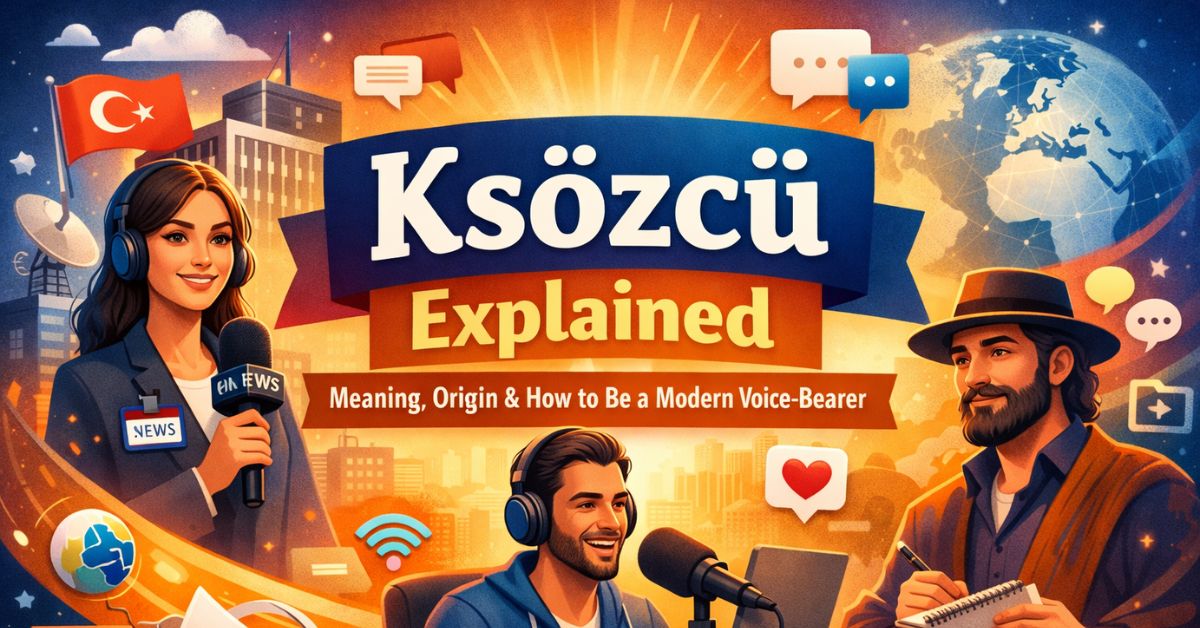
What Does Ksözcü Mean?
Ksözcü is a modern evolution of the Turkish word “sözcü,” meaning spokesperson or representative. Today, the term describes an individual who gives voice to ideas, communities, movements, or identities—especially within digital, cultural, and media spaces.
Thank you for reading this post, don't forget to subscribe!At its core, ksözcü means “voice-bearer.” It refers not merely to someone who speaks, but someone who represents.
Unlike a traditional spokesperson confined to press conferences or official statements, the modern ksözcü operates across platforms—social media, journalism, politics, art, education, and digital communities. The term carries weight because it implies responsibility: the power to speak on behalf of others.
In a hyperconnected world defined by information overload, ksözcü represents a communicative archetype—someone who channels voice with clarity, ethics, and intention.
The Linguistic Origin of Ksözcü
To understand ksözcü, we must start with Turkish linguistics.
The word originates from “sözcü.”
Breakdown:
- söz = word / speech
- -cü = doer / practitioner suffix
- sözcü = one who speaks on behalf of others (spokesperson)
Turkish is an agglutinative language, meaning words are formed by adding suffixes to a root. The suffix “-cü” (with vowel harmony variations) turns a noun into someone who practices or performs it. For example:
- spor → sporcu (athlete)
- yazı → yazıcı (writer)
- söz → sözcü (spokesperson)
So where does the “k” come from?
The “k” in ksözcü appears to be a modern stylistic adaptation—likely digital in origin. It may serve as:
- A branding device
- A phonetic emphasis
- A symbolic modernization
- A way to differentiate from the traditional institutional term
Pronunciation guide:
kuh-SUR-joo
While “sözcü” remains the formal Turkish term, “ksözcü” reflects an evolved, contemporary identity—one shaped by digital culture and global discourse.
From Traditional Sözcü to Modern Ksözcü
The difference between the classical spokesperson and the modern ksözcü is structural.
| Traditional Sözcü | Modern Ksözcü |
|---|---|
| Institutional role | Individual identity |
| Formal press statements | Multi-platform communication |
| Political or corporate setting | Digital + cultural ecosystems |
| One-way messaging | Interactive dialogue |
| Local or national audience | Global reach |
| Scripted communication | Personal voice and narrative |
The modern ksözcü is not confined to institutions. They may represent:
- A niche online community
- A marginalized group
- A creative movement
- A professional field
- A generation’s perspective
The shift is from authority-by-title to authority-by-trust.
The Four Archetypes of a Modern Ksözcü
To clarify application, we can divide ksözcü into four archetypes.
1. Institutional Ksözcü
This is the closest to the traditional meaning.
Examples include:
- Press secretaries
- Corporate communications officers
- Political representatives
- Diplomats
Their role is structured, formal, and accountable to organizations. They communicate policy, strategy, and official positions.
However, even institutional ksözcü must now navigate social media scrutiny and digital transparency.
2. Journalistic Ksözcü
Journalists often serve as intermediaries between events and the public.
They give voice to:
- Conflict zones
- Underrepresented communities
- Policy debates
- Investigative findings
The journalistic ksözcü translates complex realities into accessible narratives. Their legitimacy rests on truth, verification, and public trust.
In many cases, they are the only voice connecting marginalized stories to mainstream awareness.
3. Digital Ksözcü
This archetype dominates the modern landscape.
Digital ksözcü include:
- YouTubers
- Educators on TikTok
- Substack writers
- Podcast hosts
- Niche community moderators
They represent identities, passions, subcultures, and causes.
Unlike institutional voices, they derive authority from authenticity and audience trust—not from formal titles.
The digital ksözcü thrives in the attention economy, but must balance influence with responsibility.
4. Cultural Ksözcü
Artists, writers, filmmakers, and poets often become symbolic voices of their era.
They may represent:
- A generation
- A social movement
- A forgotten history
- A cultural revival
The cultural ksözcü speaks through narrative rather than statements. Their medium is art, but their influence can shape discourse for decades.
Why Ksözcü Matters in the Digital Age
We live in a world defined by:
- Information overload
- Algorithmic amplification
- Polarization
- Misinformation
- Fragmented attention
In such an environment, ksözcü matters because communication is no longer neutral.
Speaking is influence.
Representation shapes perception.
In a world flooded with content, ksözcü is not about speaking louder—it is about speaking responsibly.
The modern ksözcü must navigate:
- Audience trust
- Platform dynamics
- Ethical responsibility
- Cultural sensitivity
- Narrative framing
Voice is power. And power demands conscience.
The Ksözcü Framework: 5 Pillars of Effective Voice
To operationalize the concept, here is a practical framework.
1. Clarity
Define your message. Avoid ambiguity. Distill complexity without distortion. A ksözcü must communicate in a way that is understandable without oversimplifying reality.
2. Credibility
Support claims with evidence. Maintain consistency. Correct mistakes publicly. Credibility builds authority—and authority builds influence.
3. Context
Provide background. Prevent misinterpretation. Situate ideas within larger narratives. Without context, even accurate statements can mislead.
4. Connection
Understand your audience. Practice empathy. Encourage dialogue, not monologue. Communication succeeds when it resonates.
5. Conscience
Communicate ethically. Avoid manipulation. Resist misinformation. Influence without integrity erodes trust.
The Ksözcü’s Toolkit: How to Become a More Effective Voice
If you aspire to embody ksözcü principles, start here.
Master Intentional Communication
Before publishing or speaking, ask:
- What is my core message?
- Who am I representing?
- What impact could this have?
Intent shapes interpretation.
Practice Active Listening
Representation requires understanding.
Engage with:
- Community feedback
- Opposing perspectives
- Cultural nuance
A ksözcü who does not listen becomes disconnected.
Embrace Transparency
Audiences today detect inauthenticity instantly.
Be clear about:
- Biases
- Sponsorships
- Affiliations
- Uncertainty
Trust compounds over time.
Develop Narrative Skill
Facts inform. Stories persuade.
Learn to:
- Structure arguments clearly
- Use metaphor responsibly
- Avoid sensationalism
- Maintain tone discipline
Communication is craft.
Protect Ethical Boundaries
Refuse:
- Clickbait distortion
- Emotional manipulation
- False equivalency
- Performative outrage
The integrity of ksözcü depends on discipline.
Challenges Facing the Modern Ksözcü
The digital environment presents real risks.
Misinformation Speed
False information spreads faster than correction.
Context Collapse
Statements intended for one audience may be consumed by another.
Algorithmic Pressure
Platforms reward engagement—often favoring outrage over nuance.
Polarization
Representing one group may alienate another.
Burnout
Constant visibility demands emotional labor.
The modern ksözcü must balance influence with resilience.
Ksözcü and the Future: Will AI Replace the Human Voice?
Artificial intelligence can now generate speeches, simulate influencers, and automate brand communication.
We are entering an era of synthetic representation.
But AI lacks lived experience.
The future ksözcü will not compete with AI on speed—but on authenticity.
Human credibility rests on vulnerability, accountability, and moral judgment—qualities machines cannot replicate in lived terms.
The future will likely involve hybrid communication: AI-assisted clarity guided by human conscience.
Frequently Asked Questions About Ksözcü
What does ksözcü mean in English?
Ksözcü roughly translates to “voice-bearer” or modern spokesperson—someone who represents ideas or communities, especially in digital or cultural contexts.
Is ksözcü a real word?
“Sözcü” is an established Turkish word meaning spokesperson. “Ksözcü” appears to be a modern stylized evolution used in contemporary discourse.
How do you pronounce ksözcü?
It is commonly pronounced: kuh-SUR-joo.
What is the difference between sözcü and ksözcü?
“Sözcü” is the traditional Turkish term for spokesperson. “Ksözcü” reflects a modern, digital, identity-driven adaptation of the concept.
Can anyone become a ksözcü?
Yes—but responsibility is key. Authority is earned through trust, clarity, and ethical communication.
CLICK HERE FOR MORE BLOG POSTS