
 By Mobi Roller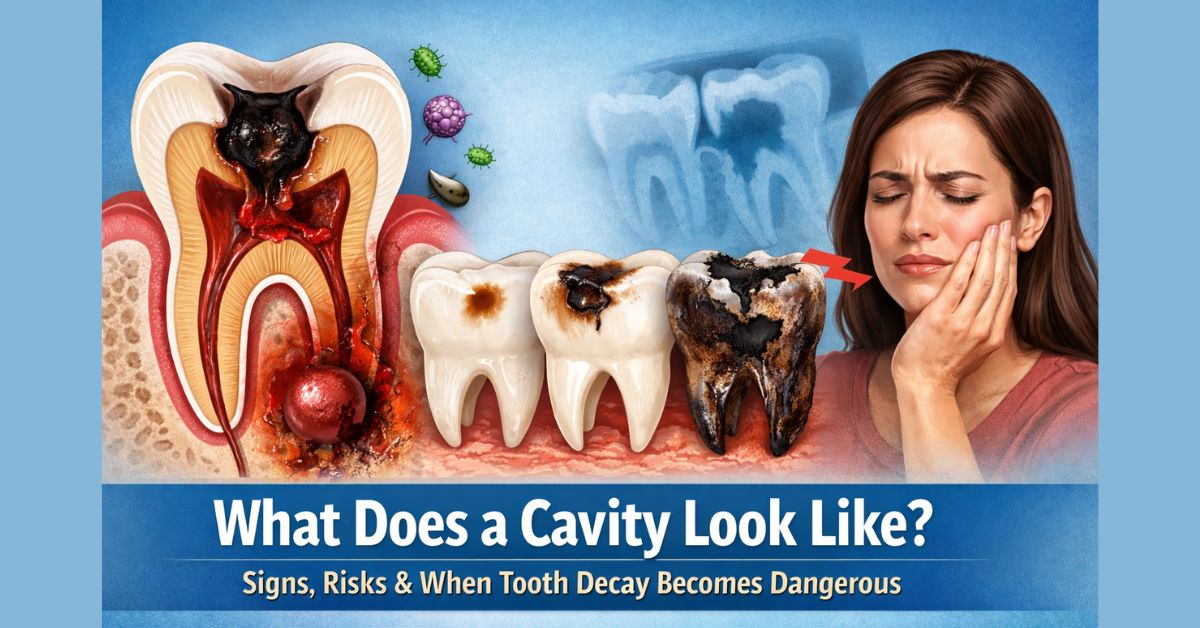
Oral health problems rarely appear overnight. Most begin quietly—with a minor cavity, subtle discoloration, or mild sensitivity—before progressing into painful infection or even life-threatening complications. Many people search questions like what does a cavity look like, how does tooth decay look, or what does decay on teeth look like because early recognition can prevent severe damage.
Thank you for reading this post, don't forget to subscribe!This comprehensive guide explains the beginning stages of a cavity, how rotten teeth develop, warning signs of rotting teeth, and whether serious dental infections mean can a cavity kill you is a real concern. By understanding these stages, you can protect both your smile and overall health.
Understanding Tooth Decay From the Start
Tooth decay begins when bacteria in the mouth feed on sugars and produce acids that weaken enamel. The beginning of cavity formation is often invisible to the untrained eye, which is why routine dental exams are essential.
Many patients ask what does the start of tooth decay look like or what does a starting cavity look like. In early stages, dentists often notice:
- Chalky white spots on enamel
- Slight roughness on the tooth decay side of tooth
- Sensitivity to sweets or cold drinks
These subtle indicators define the early stage cavity—a moment where treatment is simple and painless.
What Do Dental Caries Look Like in Each Stage?
Dental caries is the clinical term for cavities. When wondering what do dental caries look like, it helps to understand progression:
1. Demineralization Phase
A faint white or dull patch appears. This is still reversible with fluoride and hygiene.
2. Enamel Breakdown
A visible cavity hole in tooth may begin forming. Discoloration turns yellow or light brown.
3. Dentin Infection
Pain increases. Patients may notice a bad tooth smell or sensitivity.
4. Pulp Damage
At this stage, decay may produce a rotten tooth or rotten molar tooth, often requiring root canal or extraction.
Recognizing these stages early prevents serious complications.
Cavity Locations: Why Molars Are at Higher Risk
Back teeth are especially vulnerable because grooves trap food. A cavity on molar may remain hidden until pain appears. Dentists frequently discover deep decay in molars even when front teeth look healthy.
Because molars handle chewing pressure, untreated decay here can quickly progress into infection, swelling, and systemic illness.
From Minor Damage to Rotten Teeth
If ignored, a minor cavity can evolve into severe decay. Over time:
- Enamel collapses
- Infection spreads into dentin and pulp
- Odor and discoloration worsen
This leads to rotten teeth, rotting teeth, or a fully rotten tooth—conditions that affect chewing, speech, and confidence.
Searching for a dentist for rotten teeth becomes urgent at this stage, since professional treatment is the only safe solution.
How Does Tooth Decay Look in Real Life?
Patients often ask how does tooth decay look because symptoms vary. Common visual signs include:
- Brown, black, or gray staining
- Visible pits or cavity hole in tooth
- Crumbling enamel edges
- Swollen or bleeding gums near the infected area
If you’re unsure what does decay on teeth look like, comparing healthy enamel (smooth, glossy, off-white) with damaged enamel (dull, rough, dark) helps clarify the difference.
Beginning Stages of a Cavity: Why Early Detection Matters
The beginning stages of a cavity are the easiest to treat. Fluoride therapy, sealants, and improved hygiene can stop progression completely.
However, once decay penetrates deeper layers, treatment becomes more invasive—fillings, crowns, or root canals.
That’s why recognizing:
- beginning of cavity
- early stage cavity
- what does a starting cavity look like
can save both money and discomfort.
Can a Cavity Kill You? Understanding the Real Risk
Many people assume cavities are minor. But searches for can a cavity kill you highlight a serious truth: untreated dental infections can spread beyond the mouth.
While rare, complications may include:
- Abscess spreading to jaw or neck
- Blood infection (sepsis)
- Brain infection in extreme cases
Similarly, severe rotting teeth infections can become dangerous without treatment. So although death is uncommon, the risk is medically real—making prompt care essential.
The Hidden Dangers of Rotten Molars and Bad Teeth
A rotten molar tooth is particularly risky because infection sits close to major blood vessels and sinuses. Symptoms may include:
- Severe throbbing pain
- Facial swelling
- Fever
- Difficulty chewing
Ignoring a bad tooth allows bacteria to multiply, increasing chances of systemic illness.
When to See a Dentist for Rotten Teeth
You should seek a dentist for rotten teeth immediately if you notice:
- Persistent toothache
- Visible decay or crumbling enamel
- Gum swelling or pus
- Sensitivity that doesn’t fade
Early professional care prevents tooth loss and protects overall health.
Prevention: Stopping Tooth Decay Before It Starts
The best defense is prevention. To avoid ever wondering what does a cavity look like, follow these habits:
Daily Care
- Brush twice with fluoride toothpaste
- Floss to clean between teeth
- Limit sugary snacks and drinks
Professional Care
- Dental checkups every six months
- Cleanings to remove plaque
- X-rays to detect hidden cavity on molar
Preventive care stops decay at the beginning stages of a cavity, before pain or infection begins.
Treatment Options for Cavities and Rotten Teeth
Treatment depends on severity:
Early Stage
Fluoride and remineralization reverse early stage cavity damage.
Moderate Decay
Fillings repair enamel and dentin.
Advanced Infection
Root canal saves a rotten tooth by removing infected pulp.
Severe Destruction
Extraction may be necessary for rotten molar tooth cases beyond repair.
Modern dentistry makes these procedures safe and comfortable.
How Oral Health Affects Overall Health
Dental infections don’t stay isolated. Research links rotting teeth and gum disease to:
- Heart disease
- Diabetes complications
- Respiratory infections
This connection reinforces why ignoring a bad tooth is never safe.
Frequently Asked Questions
What does a cavity look like at first?
Usually a chalky white or slightly discolored patch—often painless.
How does tooth decay look when serious?
Dark holes, crumbling enamel, swelling, and strong odor.
Can a cavity kill you?
Rarely, but untreated infection can become life-threatening.
What do dental caries look like on X-ray?
Dark shadowed areas inside enamel or dentin.
Final Thoughts: Protecting Your Smile and Health
Understanding what does a cavity look like, recognizing the beginning stages of a cavity, and knowing when rotting teeth become dangerous empowers you to act early.
A simple minor cavity today can become a painful rotten tooth tomorrow—but only if ignored. With proper hygiene, regular dental visits, and prompt treatment, you can prevent infection, preserve your teeth, and avoid ever facing the frightening question: can a cavity kill you.
Your smile is more than cosmetic—it’s a vital part of your overall health. Protect it wisely.