
 By Danny Boyle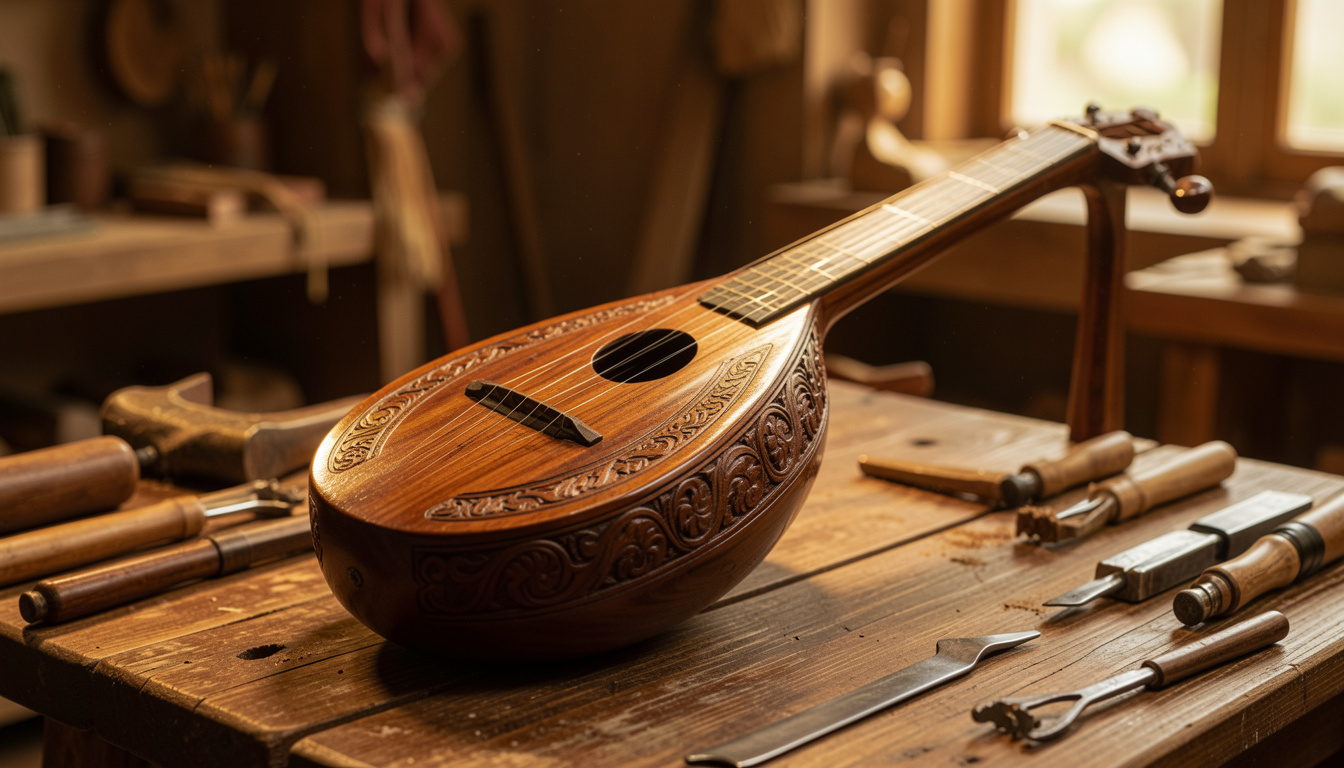
Hitaar is a traditional Middle Eastern stringed instrument, deeply woven into the fabric of Arab heritage and cultural identity. For centuries, its warm and resonant tones have echoed through desert gatherings, wedding celebrations, and community storytelling sessions across the Arabian Peninsula and beyond. Whether you are a music enthusiast, a cultural researcher, or someone curious about the world’s rich musical traditions, this complete guide covers everything you need to know from the Hitaar’s ancient origins and symbolic role in Arab society, to how it is crafted, played, and preserved in the modern world.
Thank you for reading this post, don't forget to subscribe!What is a Hitaar? Key Characteristics
The Hitaar is a chordophone an instrument that produces sound through the vibration of stretched strings native to the Middle East and Arabian Peninsula. It belongs to the same broad family as the Oud and the lute, yet it carries its own distinct identity rooted in Arab folk tradition. Unlike classical concert instruments, the Hitaar is fundamentally a communal instrument: crafted to be played around campfires, at social gatherings, and during celebrations.
| Characteristic | Details |
| Type | Chordophone (Stringed Instrument) |
| Origin | Middle East / Arabian Peninsula |
| Typical Materials | Wooden body; nylon, gut, or steel strings |
| Cultural Role | Storytelling, folk music, weddings, and celebrations |
| Classification | Traditional / Folk Instrument |
| Related Instruments | Oud, Saz, Rabab, Lute |
The Historical Journey of the Hitaar
Ancient Roots and First Strings
The origins of the Hitaar stretch back across many centuries to the nomadic tribes of the Arabian Peninsula and surrounding regions. In an era long before recorded music, these early communities relied on simple stringed instruments to express their deepest emotions love, longing, grief, and triumph around campfires under vast desert skies. Historians and ethnomusicologists suggest that the Hitaar, like many early chordophones, may share ancestral ties with ancient Mesopotamian instruments, whose remnants archaeologists have uncovered in the cradles of civilisation between the Tigris and Euphrates rivers.
Early versions of the instrument were likely constructed from the most readily available natural materials: animal gut stretched across hollowed-out wood or dried gourds. Over generations, the instrument was refined, passed from master craftsman to apprentice, each iteration improving on resonance, durability, and playability. The Hitaar thus became not merely a musical tool but a vessel for oral tradition a way of carrying stories, history, and cultural memory from one generation to the next.
Spread and Evolution via Trade Routes
As ancient trade routes expanded connecting the Arabian Peninsula to Persia, the Levant, North Africa, and beyond so too did the influence of Arab musical traditions. The Hitaar travelled with merchants, poets, and pilgrims, absorbing new techniques, decorative styles, and construction methods from each culture it encountered. Persian and Ottoman influences, in particular, left a lasting imprint on the instrument’s design, introducing more elaborate inlay work, refined tuning mechanisms, and new playing techniques.
This cross-cultural exchange enriched the Hitaar without erasing its essential Arab character. Each region that adopted the instrument gave it a slightly different name, playing style, or aesthetic identity, while still recognising it as a symbol of Arab heritage and communal expression. This evolutionary journey is a testament to the Hitaar’s adaptability and its deep resonance with the human need for musical connection.
The Hitaar in Traditional Arab Culture
More Than Music: A Symbol of Community
To understand the Hitaar is to understand something fundamental about traditional Arab social life. The instrument has never been purely a concert piece or a performance artifact it is, at its core, a social instrument. In the majlis (the traditional Arab gathering space), the Hitaar would be passed among guests, each taking a turn to play or sing. At weddings and festivals, its melodies set the tempo for folk dances and communal celebration. At funerals and moments of grief, it was the voice that gave sorrow a sound.
In many households across the Arabian Peninsula and the broader Arab world, a Hitaar hanging on the wall is more than decoration. It is a family heirloom a physical connection to ancestors, to a grandmother who sang folk songs by firelight, or to a grandfather who carried the instrument across great distances. This deep emotional and social embeddedness is what sets the Hitaar apart from many Western classical instruments, which are primarily associated with formal performance.
The Sound of Storytelling
Perhaps the Hitaar’s most vital cultural function has been as a vehicle for storytelling. In the pre-literate traditions of nomadic Arab culture, the oral poet the sha’ir was the community’s historian, philosopher, and entertainer. The Hitaar provided the musical backdrop to these recitations, transforming spoken words into something that reached beyond the mind and into the heart.
The themes carried in Hitaar-accompanied poetry are universal: tales of brave warriors, unrequited love, the beauty of the desert landscape, the pain of exile, and the joy of homecoming. Each note, each melodic phrase, was chosen to amplify the emotional weight of the narrative. In this way, the Hitaar was never just an accompaniment it was a co-author of the story, giving texture, depth, and emotional nuance to words that might otherwise have remained simply spoken.
The Art of Crafting a Hitaar: A Luthier’s Guide
Crafting a Hitaar is a skilled, labour-intensive art form that demands both technical precision and deep aesthetic sensibility. Traditional luthiers the craftsmen who build stringed instruments may spend weeks or even months on a single piece, selecting every element with care.
Selecting the Materials
The choice of wood is one of the most critical decisions in building a Hitaar. Different wood species produce noticeably different acoustic properties, and skilled craftsmen learn through years of experience how to match the right wood to the desired sound profile:
- Mulberry: Prized for its warm, rich tonal qualities and its cultural significance in the Arab world. Many traditional Hitaars are built with mulberry bodies.
- Walnut: Offers a darker, deeper resonance and excellent durability, making it a popular choice for both body and neck construction.
- Mahogany: Produces a warmer, mid-range tone and is widely used in contemporary models due to its availability and workability.
- Rosewood: Often used for the fingerboard, rosewood provides a smooth playing surface and contributes to a bright, articulate tone.
For the strings, craftsmen may choose from several materials depending on the intended sound and playing style. Traditional gut strings produce an earthy, organic tone deeply associated with classical Arab music. Nylon strings offer a similar warmth with greater durability and tuning stability, while steel strings produce a brighter, louder sound better suited to ensemble performance.
The Construction Process: Step-by-Step
The construction of a Hitaar follows a sequence of carefully executed stages, each building on the last:
- 1. Carving the Body Bowl: The deep, rounded back of the Hitaar is typically formed by bending and gluing multiple thin strips (staves) of wood into a bowl shape, similar to the construction of an Oud. This requires careful shaping and clamping, followed by extended drying time.
- 2. Attaching the Soundboard: The flat top of the instrument the soundboard is glued to the bowl. The soundboard, usually made from a tonewood like spruce or cedar, is the primary driver of the instrument’s acoustic output.
- 3. Crafting the Neck: The neck is carved separately and then joined to the body at a precise angle. The angle and length of the neck determine the instrument’s playability and scale length.
- 4. Installing the Tuning Pegs: Traditional Hitaars use wooden friction pegs, while modern instruments may incorporate machine-head tuners for greater stability.
- 5. Final Setup and Tuning: The craftsman strings the instrument, adjusts the nut and bridge heights for optimal action, and tests the sound output against a reference pitch. This stage may involve subtle adjustments that make the difference between a good instrument and a great one.
Decorative Inlay and Final Artistry
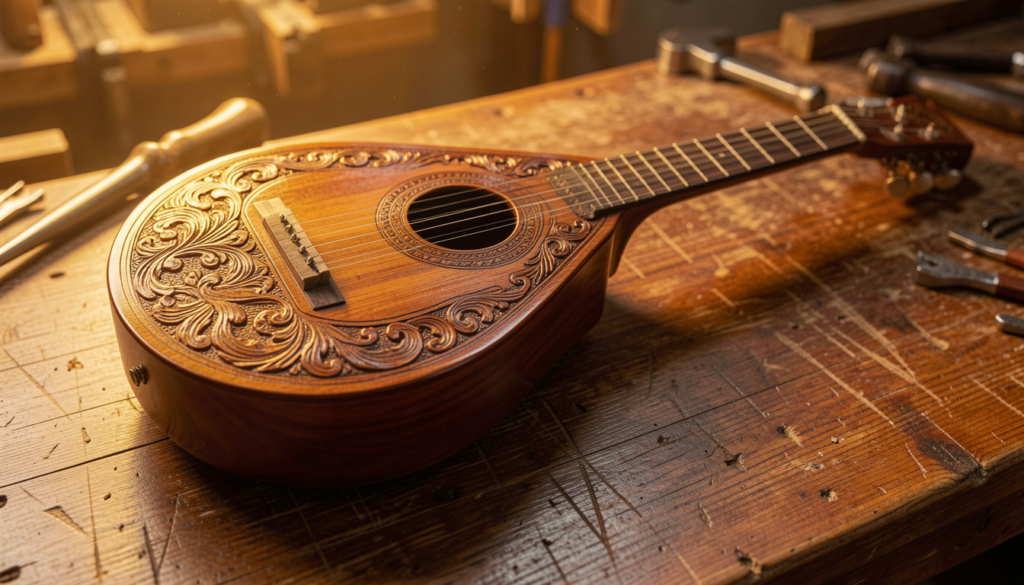
What truly elevates a master-crafted Hitaar above a basic model is the quality of its decorative work. Traditional luthiers often spend as much time on embellishment as on construction, using techniques passed down through generations. Mother-of-pearl inlay along the soundhole rosette and edge binding is one of the most distinctive features of high-end Hitaars, catching the light and reflecting the instrument’s cultural prestige. Geometric Islamic patterns, calligraphic motifs, and floral designs may be carved or inlaid into the soundboard, neck, and headstock, transforming each instrument into a unique work of functional art.
The Modern Hitaar: Innovation and Fusion
New Materials, New Sounds
The 21st century has brought significant innovation to the world of traditional Arab instruments, and the Hitaar is no exception. Modern luthiers have begun experimenting with eco-friendly tonewoods such as sustainably sourced maple and reclaimed timber, addressing environmental concerns without sacrificing acoustic quality. Synthetic composite materials, including carbon fibre components in the neck and reinforcement strips in the soundboard, have also been introduced to improve durability and resistance to the humidity fluctuations that can damage traditional wooden instruments.
Perhaps the most significant modern development has been the electric-acoustic Hitaar. Fitted with internal pickup systems, these instruments can be amplified without losing the warmth and character of the acoustic sound making them suitable for concert performances, recording sessions, and collaborative projects with electric bands.
The Hitaar in Contemporary Music
Today, the Hitaar is experiencing a remarkable cultural renaissance, driven by a new generation of Arab musicians who refuse to treat their heritage as something confined to museums or folk archives. Contemporary artists are blending the Hitaar’s rich tonal palette with genres as diverse as jazz, electronic music, world fusion, and even rock. This fusion approach has introduced the instrument to younger and more geographically diverse audiences than ever before, generating genuine global interest in Arab musical heritage.
International music festivals in Europe, North America, and Asia have featured Hitaar performances, while video platforms like YouTube have made it possible for traditional players from the Arabian Peninsula to reach millions of listeners worldwide. This digital exposure has created new communities of enthusiasts people who may have no direct cultural connection to Arab heritage but who are captivated by the instrument’s unique sound and expressiveness.
Online Communities and Learning Resources
The internet has played a transformative role in the Hitaar’s modern story. Online tutorials on platforms like YouTube now offer instruction for everything from basic tuning to advanced melodic improvisation. Social media groups on Facebook and Reddit connect Hitaar players and enthusiasts across continents, facilitating the sharing of tips, recordings, luthier recommendations, and cultural discussions. For learners who do not have access to a local teacher, these resources have democratised access to the instrument in ways that simply were not possible a generation ago.
How to Choose and Care for Your First Hitaar
A Beginner’s Buying Guide
Choosing your first Hitaar can feel overwhelming, but focusing on a few key factors will help you make a confident decision:
- Budget: Entry-level student models crafted from laminated wood are a practical and affordable starting point. Mid-range instruments use solid wood tops for better resonance, while premium artisan pieces are made entirely from solid tonewoods with hand-applied decoration.
- Size: Hitaars come in various body sizes. Beginners with smaller hands may find a shorter scale length more comfortable. Try the instrument before buying where possible.
- Build Quality: Check that the neck joins the body at a consistent angle, that the frets (if present) are level, and that the tuning pegs hold their position without slipping.
- Intonation: Play notes at multiple positions along the neck. A well-set-up instrument should remain in tune across its full range.
- Source: Purchase from reputable instrument dealers, specialist Middle Eastern music shops, or verified online sellers with clear return policies.
Essential Maintenance Tips
Proper care significantly extends the life of a Hitaar and preserves its sound quality:
- Cleaning: Wipe down the strings and body with a soft, dry cloth after each playing session to remove oils and moisture.
- Humidity Control: Wood instruments are sensitive to humidity. Store your Hitaar in a case with a humidifier in dry climates, and avoid leaving it near heating vents or in direct sunlight.
- String Changing: Change strings regularly approximately every 3 to 6 months depending on how frequently you play. Old strings lose brightness and become difficult to tune accurately.
- Storage: Always store the instrument in its case when not in use to protect it from dust, impacts, and temperature fluctuations.
Understanding Hitaar Pricing
The price of a Hitaar varies enormously depending on the quality of materials, the skill of the luthier, and the level of decorative work involved. Basic student models suitable for beginners typically fall in a relatively accessible price range, while mid-range instruments crafted with solid tonewoods and modest inlay work command a higher price. Master-crafted artisan Hitaars built by experienced luthiers using premium tonewoods, hand-fitted tuning machines, and intricate mother-of-pearl inlay represent the upper tier and are considered collector’s items as much as playable instruments.
Frequently Asked Questions About the Hitaar
What is a Hitaar instrument?
The Hitaar is a traditional Middle Eastern stringed instrument (chordophone) rooted in Arab folk culture. It is used for storytelling, folk music, and community celebrations across the Arabian Peninsula and surrounding regions.
How is a Hitaar different from an Oud?
Both are Arab chordophones, but they differ in construction and tradition. The Oud is a fretless, pear-shaped instrument associated with classical Arab and Turkish music, while the Hitaar has stronger roots in folk and nomadic traditions. The Hitaar may also have a different body shape, scale length, and stringing arrangement depending on its regional variant.
Where did the Hitaar originate?
The Hitaar originated in the Middle East and Arabian Peninsula, with possible ancestral connections to ancient Mesopotamian stringed instruments. It evolved over centuries as it spread through trade routes across the Arab world.
What is the Hitaar made of?
Traditional Hitaars are made from tonewoods such as mulberry, walnut, or mahogany for the body, and rosewood for the fingerboard. Strings may be gut, nylon, or steel. Modern versions may incorporate eco-friendly woods and synthetic composite materials.
How much does a Hitaar cost?
Prices vary widely. Student models suitable for beginners are affordable entry points, while mid-range solid-wood instruments cost more. Master-crafted artisan pieces with premium tonewoods and decorative inlay can reach significant prices and are often considered collector’s items.
Is the Hitaar hard to learn?
Like any stringed instrument, the Hitaar requires patience and consistent practice. Beginners with experience in other stringed instruments (such as guitar or Oud) may find the learning curve more manageable. Online tutorials and community forums make it increasingly accessible to self-taught learners worldwide.
Who are famous Hitaar players?
While the Hitaar has historically been played by folk musicians rather than globally famous solo artists, a new generation of Arab musicians is bringing the instrument to wider attention through fusion projects and online performance. Researching contemporary Arab folk music festivals and world music platforms is the best way to discover current notable players.
Can I buy a Hitaar online?
Yes. The Hitaar is available from specialist Middle Eastern instrument retailers, online marketplaces, and directly from individual luthiers. Always verify the seller’s reputation, check return policies, and request detailed photographs before purchasing online.
How do you tune a Hitaar?
Tuning varies by regional tradition and playing context. A digital clip-on tuner is the most reliable method for beginners, allowing precise tuning to whatever temperament or scale the player prefers. Traditional players often tune by ear, matching the Hitaar to a reference pitch or to other instruments in an ensemble.
What is the cultural significance of the Hitaar?
The Hitaar is far more than a musical instrument in Arab culture. It is a symbol of community identity, a vehicle for oral storytelling, and a living link to ancestral heritage. Its presence at weddings, folk festivals, and family gatherings reflects its enduring role at the heart of Arab social and emotional life.
Conclusion:
The Hitaar is not simply an instrument from the past it is a living tradition, continuously evolving while remaining anchored in the deep cultural roots from which it grew. From the campfires of ancient nomadic tribes to the recording studios and international stages of the modern world, the Hitaar has demonstrated a remarkable capacity to adapt, endure, and inspire.
Preserving the Hitaar means preserving something essential about human culture: the need to tell stories, to connect with community through music, and to pass beauty from one generation to the next. Whether you are a player, a collector, a researcher, or simply someone who heard a recording and felt something stir, the Hitaar offers a doorway into one of the world’s most rich and expressive musical traditions.
Explore it. Listen to it. And if the opportunity arises play it. The strings are waiting.
CLICK HERE FOR MORE BLOG POSTS