
 By Mobi Roller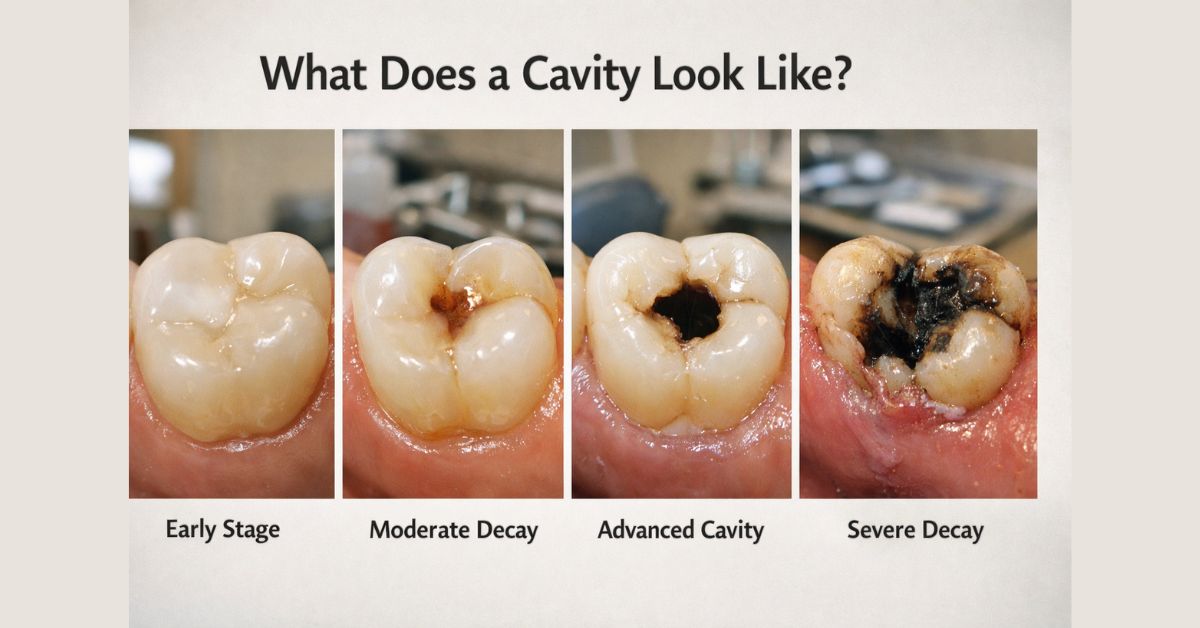
If you’ve ever wondered what does a cavity look like, you’re not alone. Dental cavities are one of the most common health problems worldwide, yet many people don’t recognize the warning signs until they’re sitting in the dentist’s chair. Understanding what tooth decay looks like at various stages can help you catch problems early and avoid more serious complications.
Thank you for reading this post, don't forget to subscribe!Understanding What Does a Cavity Look Like
When people ask what does a cavity look like, the answer depends on how far the decay has progressed. In the beginning stages of a cavity, you might notice subtle changes that are easy to miss. An early stage cavity often appears as a small white or chalky spot on your tooth’s surface. This is actually your tooth’s enamel starting to lose minerals, and it’s the very first warning sign.
As decay advances, you’ll start to see what does decay on teeth look like in more obvious ways. The affected area may turn brown, yellow, or even black. What does a starting cavity look like can vary depending on its location—a cavity on molar teeth might show up as dark spots in the grooves, while tooth decay side of tooth appears as discoloration between your teeth or along the gumline.
Many people search for what do beginning cavities look like because they want to catch problems early. The truth is, what does the start of tooth decay look like can be quite subtle. You might notice a rough texture when you run your tongue over the tooth, or you might see what appears to be a minor cavity—just a tiny spot of discoloration. Even what does an early stage cavity look like can be difficult to spot without professional help, which is why regular dental checkups are so important.
Recognizing Different Stages: From Minor Cavity to Rotten Teeth
The progression from a beginning of cavity to more serious problems happens gradually. In the early stages, you might notice what do dental caries look like—small areas of decay that haven’t yet formed a visible cavity hole in tooth. At this point, the damage might still be reversible with proper care.
However, if left untreated, that minor cavity will continue to grow. You’ll begin to see what does tooth decay look like in its more advanced forms—visible pits or holes in the tooth surface. A cavity on the side of tooth can be particularly problematic because it’s often hidden from view until it becomes quite large.
When people don’t seek treatment, they may eventually deal with a bad tooth or even rotten tooth. Rotten teeth are the result of severe, prolonged decay. What started as a very early cavity has now progressed to extensive damage. Rotting teeth or rotten molar tooth situations represent the final stages of untreated decay, where the tooth structure has been significantly compromised.
The Serious Question: Can a Cavity Kill You?
This might sound dramatic, but it’s a legitimate concern that leads many people to search for answers. Can a cavity kill you? While a simple cavity itself won’t be fatal, the complications from untreated tooth decay absolutely can be life-threatening.
The reality is that dental infections can spread beyond your mouth. An untreated cavity can lead to an abscess, and if that infection enters your bloodstream, it can cause sepsis—a potentially deadly condition. So while we might rephrase the question as “can a tooth cavity kill you” or “can an untreated cavity kill you,” the answer remains the same: yes, in extreme cases, dental infections can be fatal.
Similarly, people ask “can rotting teeth kill you” or “can a rotting tooth kill you.” The answer is yes—severe dental infections from rotten teeth can spread to vital organs, including your brain and heart. Even questions like “can u die from abscess tooth” or “can a tooth infection kill you” underscore the very real dangers of ignoring dental health.
This isn’t meant to scare you, but rather to emphasize why even what seems like a small problem needs attention. What appears to be just a minor cavity today could become a serious health threat if ignored.
Why You Need a Dentist for Rotten Teeth
If you’re dealing with advanced decay, searching for a dentist for rotten teeth should be your immediate priority. Many people with rotten teeth feel embarrassed about their condition and delay seeking help. However, dental professionals have seen it all, and their primary concern is helping you get healthy.
The question “how do you fix rotten teeth” depends on the severity of the damage. Early-stage decay might only require a filling, while more advanced cases could need root canals, crowns, or even extractions. Can a rotten tooth be fixed? In many cases, yes—modern dentistry offers numerous solutions for even severely damaged teeth.
How Long Can You Leave a Cavity Untreated?
One of the most common questions people have is “how long can you have a cavity” before it becomes serious. The unfortunate truth is that every cavity is different, and there’s no safe waiting period. How long does it take to get rid of cavities through treatment varies based on severity, but waiting to find out means risking your health.
Some people wonder “will a cavity go away” on its own. The short answer is no—once a cavity has formed, it won’t heal without professional intervention. While beginning stages of a cavity might be reversible through improved oral hygiene and fluoride treatments, once the enamel is actually broken, you need dental care.
Can cavities get worse? Absolutely. Without treatment, decay will continue to progress, eventually reaching the tooth’s inner pulp and potentially causing an infection. This is why understanding what an early stage cavity look like and seeking prompt treatment is so important.
Are Cavities Permanent Damage?
People often ask “are cavities permanent?” The cavity itself—the hole in your tooth—is permanent damage to the natural tooth structure. However, the good news is that can a cavity be fixed? Yes, dentists can restore the function and appearance of your tooth through various treatments.
The key is catching problems early. A very early cavity or beginning of cavity might be treated with less invasive methods. But once you’re dealing with advanced decay or a cavity hole in tooth, you’ll need more extensive restorative work.
Taking Action: Prevention and Treatment
Understanding what cavities look like at various stages empowers you to take action. Don’t wait until you have a bad tooth or are dealing with rotting tooth situations. Regular dental checkups, good oral hygiene, and prompt treatment of any concerning spots or symptoms are your best defenses.
If you notice any signs of tooth decay—whether it’s an early stage cavity, discoloration, sensitivity, or visible holes—schedule a dental appointment right away. The earlier you address the problem, the simpler and less expensive the treatment will be.
Remember, tooth decay doesn’t take a day off. Every day you wait, that cavity on molar or tooth decay side of tooth gets a little worse. Whether you’re dealing with what appears to be a minor cavity or more serious concerns about rotten teeth, professional dental care is the answer.
The Bottom Line
From understanding what do beginning cavities look like to recognizing when you need a dentist for rotten teeth, knowledge is your most powerful tool in maintaining oral health. While questions like “can a cavity kill you” or “can rotting teeth kill you” highlight serious potential complications, the good news is that these outcomes are entirely preventable with proper care.
Don’t let embarrassment, fear, or procrastination keep you from seeking treatment. Whether you’re noticing what looks like the beginning stages of a cavity or dealing with more advanced decay, dental professionals are ready to help. Your teeth are worth protecting, and the sooner you act, the better your outcomes will be.
Take that first step today—examine your teeth, note any concerns, and schedule a dental checkup. Your future self will thank you for taking care of those cavities before they become a bigger problem.