
 By Danny Boyle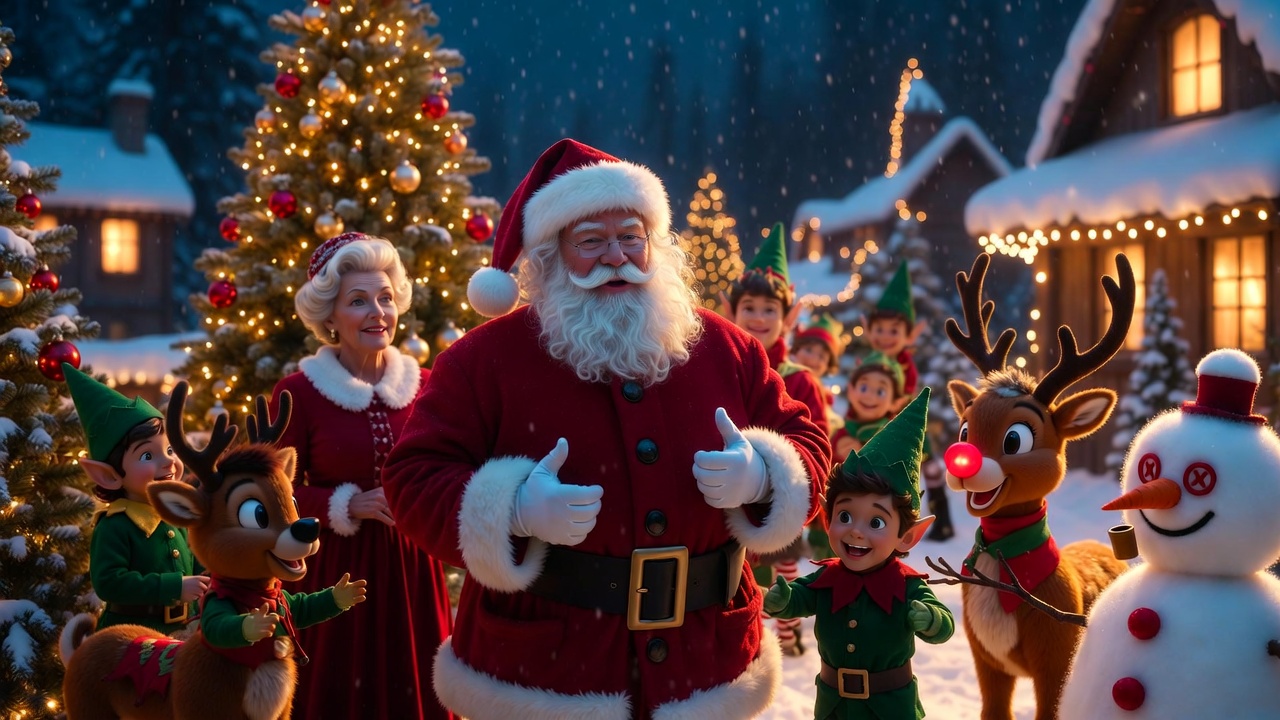
Christmas has never been a single story. It is a thousand stories layered over one another ancient Norse myths, medieval Christian devotion, Victorian sentimentality, Hollywood magic each adding its own cast of characters to the world’s most celebrated holiday. Some of these figures bring gifts. Some bring fear. Some embody hope so pure it makes children weep with joy.
Thank you for reading this post, don't forget to subscribe!Whether you are a writer searching for narrative inspiration, a trivia enthusiast building the perfect quiz, a parent answering a child’s relentless questions, or simply someone who has always wondered why a horned demon shows up alongside jolly old Saint Nick this guide is for you.
We have gathered over 100 Christmas characters from mythology, scripture, literature, film, television, and folklore traditions spanning every continent. Each entry answers not just who, but why why this figure exists, what it represents, and why it has endured.
“Christmas characters are not mere decoration. They are the vessels through which cultures carry their deepest values generosity, consequence, hope, and the redemptive power of change.”
What Is a Christmas Character? Defining the Festive Figure
A Christmas character is any mythical, fictional, symbolic, or personified figure whose identity is meaningfully tied to Christmas or the broader winter holiday season. This definition is deliberately wide. It includes historical figures transformed by legend (Saint Nicholas), purely invented ones (Rudolph), ancient pre-Christian spirits absorbed into Christmas tradition (the Tomten), literary creations (Ebenezer Scrooge), and abstract personifications (the Spirit of Giving).
The key criterion is cultural function: does this figure carry meaning that helps a community understand, celebrate, or interrogate what Christmas is for? If yes, it belongs in this guide.
The Santa Claus Universe
No single figure dominates Christmas mythology more completely than Santa Claus. But “Santa Claus” is less one character than a family of related gift-bringer archetypes, each shaped by its own culture, each reflecting a slightly different vision of what Christmas generosity looks like.
Santa Claus & His Many Global Faces
Santa Claus the red-suited, white-bearded icon beloved by children worldwide is the 20th century’s most successful mythological creation, built on a foundation laid by Saint Nicholas of Myra, the 4th-century bishop whose legendary secret gift-giving to the poor became the seed of a global legend. His modern visual identity was solidified partly through Coca-Cola’s celebrated 1930s advertising campaigns illustrated by Haddon Sundblom.
| Name | Country / Culture | Key Traits |
|---|---|---|
| Santa Claus / Kris Kringle | USA & Canada | Red suit, chimney, North Pole workshop, naughty/nice list |
| Father Christmas | United Kingdom | Deep green or red robes, older and more mystical origin |
| Ded Moroz (Grandfather Frost) | Russia & Eastern Europe | Blue robes, arrives on New Year’s Eve with granddaughter Snegurochka |
| Papá Noel | Latin America / Spain | Brings gifts on Christmas Eve; some regions prefer the Three Kings |
| Sinterklaas | Netherlands / Belgium | Arrives by boat from Spain on December 5th; travels with helpers |
| Père Noël | France | Red suit, similar to Santa; leaves gifts in shoes by the fireplace |
| La Befana | Italy | Witch-like figure who fills stockings on January 5th |
| Hoteiosho | Japan | Buddhist monk figure; brings gifts to well-behaved children |
| Olentzero | Basque Country | Coal miner who comes down the mountain to bring gifts |
Santa’s Closest Helpers
Behind every great myth is a supporting cast. Santa’s world is populated by a rich array of companions and helpers who carry the narrative weight of the Christmas workshop.
Christmas Elves
Tireless toy-makers in Santa’s workshop, derived from Scandinavian nisse folklore. They represent the joy of creative labour done in service of others.
Mrs. Claus
Santa’s warm and capable partner, first appearing in an 1849 short story. She embodies the domestic heart of Christmas warmth, welcome, and practical wisdom.
Hermey (Rudolph’s Elf)
The elf who wanted to be a dentist, from the beloved 1964 Rankin/Bass special. A symbol of individuality and finding one’s own path.
Yukon Cornelius
The boisterous prospector from Rudolph the Red-Nosed Reindeer a figure of adventurous friendship and unconditional acceptance.
Santa’s Famous Reindeer
The eight original reindeer were introduced by Clement Clarke Moore in his 1823 poem A Visit from St. Nicholas (“‘Twas the Night Before Christmas”). A ninth joined the team in 1939, when copywriter Robert L. May created Rudolph for a Montgomery Ward promotional booklet and transformed him into perhaps the most famous Christmas character of the modern era.
| Reindeer | Name Meaning / Associated Trait |
|---|---|
| Dasher | Speed and swift movement |
| Dancer | Grace and joyful motion |
| Prancer | High spirits and elegance |
| Vixen | From Old English fyxen sly wit and playfulness |
| Comet | Brilliance, a streak of light across the sky |
| Cupid | Love, the power of affection in Christmas giving |
| Donner (Donder) | Thunder power and presence |
| Blitzen | Lightning electrifying energy |
| Rudolph | The glowing outsider symbol of difference embraced and celebrated |
Icons of Classic Literature
No single work has shaped the modern understanding of Christmas more profoundly than Charles Dickens’ A Christmas Carol (1843). Published when Christmas was a fading tradition, Dickens’ novella almost single-handedly reinvented the holiday as a season of generosity, social conscience, and family warmth.

The Characters ofA Christmas Carol
Ebenezer Scrooge
Literature’s greatest miser turned its greatest convert. Scrooge is the archetype of redemption proof that it is never too late to choose generosity over greed.
Tiny Tim Cratchit
“God bless us, every one.” The frail, cheerful son of Bob Cratchit. Tiny Tim personifies innocent hope and the moral claim of the vulnerable on the powerful.
Jacob Marley
Scrooge’s dead business partner, doomed to wander in chains forged from his own greed. A terrifying symbol of consequence without redemption.
Ghost of Christmas Past
A wavering, candle-like spirit who forces Scrooge to witness the moments that made him who he is memory as a tool for healing.
Ghost of Christmas Present
Enormous, jolly, and surrounded by feasting, he embodies the abundance of the present moment and the suffering hidden beneath it.
Ghost of Christmas Yet to Come
Silent, shrouded, pointing only the most frightening of the spirits. He represents mortality and the weight of unchecked choices.
Other Beloved Literary Christmas Characters
- Bob Cratchit Scrooge’s underpaid clerk; a symbol of dignified poverty and familial devotion
- The Nutcracker Prince Hans Christian Andersen / Hoffmann’s magical hero, symbol of childhood wonder
- The Little Match Girl Hans Christian Andersen’s heartbreaking figure of poverty and consoling fantasy
- Clara (The Nutcracker) The brave, imaginative girl at the heart of Tchaikovsky’s ballet
- Tom Plummer Dickens’ jolly nephew Fred, representing unconditional festive generosity
- Fezziwig Scrooge’s beloved former employer; the standard for what a generous boss looks like

Figures from Folklore, Myth & Legend
Long before Dickens or Hollywood, winter was a season of darkness and danger. The folklore characters of this era were not uniformly jolly. Many were figures of warning, discipline, and primal fear necessary counterweights to the season’s sweetness. These are the Christmas characters that remind us the holiday has always had shadow as well as light.
The Dark Companions: Disciplinarian & Warning Figures
| Figure | Origin | Role | Fate of Bad Children |
|---|---|---|---|
| Krampus | Alpine Austria / Bavaria | Punishes naughty children; counterpart to Saint Nicholas | Beaten with birch switches, stuffed in a sack, dragged to the underworld |
| Belsnickel | German-speaking regions | Arrives weeks before Christmas to test children | Switches for the naughty, candy for the good |
| Frau Perchta | Alpine Germanic / Austrian | Roams between Christmas and Epiphany; checks domestic order | Those who misbehave are disembowelled and stuffed with straw |
| Hans Trapp | Alsace, France | Scarecrow-like figure accompanying Père Noël in eastern France | Carries children away in a sack |
| Zwarte Piet | Netherlands / Belgium | Sinterklaas’s controversial helper | Carries bad children to Spain in a sack |
Other Major Folklore Figures
Yule Cat (Jólakötturinn)
The enormous Icelandic black cat who roams the countryside on Christmas Eve and devours anyone who has not received new clothing. A myth that encouraged textile workers to finish their work before the holiday.
Kallikantzaroi
Underground goblins from Greek and South Slavic folklore who emerge during the Twelve Days of Christmas to cause chaos, spoil food, and torment households.
Mari Lwyd
The Grey Mare a Welsh wassailing tradition in which a decorated horse skull is carried door-to-door, engaging in rhyming battles of wit with householders. A surviving fragment of ancient midwinter custom.
Tomten / Nisse
The Scandinavian household spirit who protects the farm. In modern tradition, often recast as a red-hatted gnome who delivers gifts the ancestor of Santa’s elves.
Christkind
The Christ Child as a gift-bringer a radiant, angel-like figure promoted by Martin Luther as an alternative to Saint Nicholas. Still the primary gift-bringer in parts of Germany, Austria, and Switzerland.
Grýla
The terrifying Icelandic ogress who descends from the mountains each Christmas to eat badly-behaved children. Mother of the thirteen mischievous Yule Lads.
The Six Yule Lads of Iceland
Iceland has not one but thirteen Christmas figures the Yule Lads (Jólasveinar), sons of the ogress Grýla. Each arrives on one of the thirteen nights before Christmas and is named for a specific mischievous trait.
- Stekkjastaur Sheep-Cote Clod (harasses sheep)
- Giljagaur Gully Gawk (steals milk froth)
- Stúfur Stubby (steals pans for the crust)
- Þvörusleikir Spoon Licker
- Pottasleikir Pot Scraper
- Askasleikir Bowl Licker
The Biblical & Nativity Characters
At the theological heart of Christmas is the Nativity the story of the birth of Jesus of Nazareth in Bethlehem, as recorded in the Gospels of Matthew and Luke. These figures are the oldest Christmas characters of all, and for the majority of the world’s 2.4 billion Christians, they remain its central meaning.
- Jesus Christ The Incarnate Word; God born as an infant; the reason for the season in Christian theology
- Mary The Virgin Mother; symbol of humility, grace, and divine favour
- Joseph The adoptive father; a model of quiet, faithful protection
- The Three Wise Men (Magi) Caspar, Melchior, Balthasar; gift-bearers from the East who followed a star
- Shepherds The first to hear the angels’ announcement; symbols of the humble receiving divine news
- The Angels Heralds of the Incarnation; “Gloria in Excelsis Deo”
- Gabriel The archangel who announced the birth to Mary
- Herod The paranoid king who ordered the Massacre of the Innocents; a shadow over the story’s light
Beloved Characters from Modern Movies & TV
The 20th century gave Christmas a new mythology factory: Hollywood, television, and animation studios. Many of these characters have achieved a cultural permanence that rivals characters from literature centuries older.
The Grinch & Whoville
Dr. Seuss introduced The Grinch in his 1957 book How the Grinch Stole Christmas! a green, cave-dwelling misanthrope who despises the noise and cheer of the Whos of Whoville. His attempt to destroy Christmas by stealing its material trappings teaches him that “Christmas, perhaps, means a little bit more.” The Grinch is arguably the second most recognisable Christmas character after Santa, and his story has been adapted into a beloved 1966 animated special and multiple films.
Cindy Lou Who the small Who who nearly catches the Grinch in the act but treats him with guileless kindness functions as the moral conscience of the story.
Christmas Animated Classics
Frosty the Snowman
A magically animated snowman who symbolises the transient joy of childhood “I’ll be back again someday.” First appeared in a 1950 song by Jack Rollins and Steve Nelson.
Bumble (Abominable Snowman)
From the 1964 Rankin/Bass special Rudolph the Red-Nosed Reindeer. A fearsome creature who ultimately becomes a gentle helper a story of rehabilitation over exclusion.
Olaf
Disney’s loveable snowman from Frozen a naïve optimist who wishes to experience summer and embodies unconditional love and wonder.
The Conductor (Polar Express)
From Chris Van Allsburg’s 1985 book and its 2004 film adaptation. A figure who tests the faith of a doubting boy belief, not sight, opens the magic of Christmas.
Live-Action Modern Icons
- Buddy the Elf Will Ferrell’s human raised as an elf in Elf (2003); pure, childlike joy colliding with the cynical adult world
- Kevin McCallister The resourceful child hero of Home Alone (1990); childhood independence and ingenuity as Christmas adventure
- Harry & Marv The bumbling “Wet Bandits” from Home Alone; comedy villains whose ineptitude is its own moral lesson
- Ralphie Parker The BB-gun-obsessed boy narrator of A Christmas Story (1983); nostalgia for the earnest desires of childhood
- Clark Griswold The hopelessly optimistic family man of National Lampoon’s Christmas Vacation; the patron saint of holiday disasters
- George Bailey The despairing man who discovers his worth in It’s a Wonderful Life (1946); perhaps cinema’s deepest exploration of community and consequence
- Clarence Odbody The angel who earns his wings by saving George; kindness as its own reward
- Jack Skellington Tim Burton’s Pumpkin King who misappropriates Christmas; a story about understanding other people’s joy
- Scott Calvin (Santa Clause) An accidental Santa who grows into the role; identity and responsibility
International Gift-Bringers & Winter Spirits
The impulse to imagine a benevolent supernatural figure delivering gifts during midwinter appears in virtually every culture touched by winter. These figures are not imitations of Santa Claus many predate him significantly. They are parallel expressions of the same deep human desire: to believe that the darkness of winter will be answered with unexpected gifts.
Ded Moroz & Snegurochka
Grandfather Frost and his granddaughter the Snow Maiden are the beloved gift-bringers of Russia, Ukraine, and much of Eastern Europe arriving on New Year’s Eve in a horse-drawn sleigh.
La Befana
Italy’s beloved witch-like gift-bringer fills stockings on the night of January 5th. Legend says she was invited to follow the Magi but declined and has been searching for the Christ Child ever since.
Olentzero
A coal-faced, cider-drinking Basque charcoal maker who descends from the mountains on Christmas Eve to bring gifts. One of Europe’s most distinctly regional Christmas characters.
Tió de Nadal
The “Christmas Log” a Catalan tradition in which a smiling hollow log is “fed” from December 8th until Christmas, then beaten with sticks to make it “defecate” gifts and sweets. Christmas characters, it turns out, are wonderfully strange.
Hoteiosho
Japan’s Christmas gift-bringer, a Buddhist monk figure associated with happiness and good fortune who brings presents to well-behaved children.
Julemanden
Denmark’s Father Christmas figure, closely related to the Nisse. He arrives on Christmas Eve with gifts, accompanied by his elves.
Symbolic & Abstract Christmas Figures
Not all Christmas characters have names or faces. Some are personifications of the season’s deepest values forces or ideas given just enough shape to be visualised, invoked in stories, and passed down through generations.
- The Spirit of Giving The animating principle behind every Christmas character from Santa to the Magi; generosity made mythological
- The Spirit of Christmas A nebulous but powerful presence invoked whenever characters must “recapture” or “save” Christmas
- The Christmas Star (Star of Bethlehem) The astronomical omen that guided the Magi; a symbol of divine guidance appearing in darkness
- The Yule Log An ancient Norse tradition of burning a great log through the winter solstice night; protection, warmth, and the return of the sun
- The Snowman A figure built from winter’s raw material, cheerful and impermanent; winter joy accepted without clinging
- Father Time Often associated with the dying year at Christmas/New Year; the spirit of endings and continuity
- The Ghost of Christmas A recurring archetype in folklore and literature; the idea that the dead return during the winter’s liminal nights
Frequently Asked Questions About Christmas Characters
Who is the most famous Christmas character?
Santa Claus is universally recognised as the most famous Christmas character in the world, recognised by children and adults across virtually every culture that celebrates the holiday. His origins trace to Saint Nicholas of Myra, a 4th-century Christian bishop famous for his secret generosity, whose legend spread through Europe and eventually merged with Dutch Sinterklaas traditions to create the Santa we know today.
What are the names of all nine of Santa’s reindeer?
The original eight, from Clement Clarke Moore’s 1823 poem, are: Dasher, Dancer, Prancer, Vixen, Comet, Cupid, Donner, and Blitzen. The ninth, Rudolph, was created by Robert L. May in 1939 for a Montgomery Ward promotional booklet and made famous by the 1949 song.
Is Krampus a real Christmas character where does he come from?
Yes Krampus is a genuine figure from Alpine folklore (Austria, Bavaria, and surrounding regions), predating the Christian era and likely rooted in pre-Christian Germanic mythology. He functions as the fearful counterpart to the gift-giving Saint Nicholas: Nicholas rewards the good, Krampus punishes the bad. Krampusnacht (Krampus Night) is celebrated on December 5th.
What is the difference between Santa Claus and Father Christmas?
Today the two names are largely interchangeable, but they have distinct origins. Father Christmas is an older British figure, originally representing the personification of Christmas as a season of feasting and merriment not necessarily a gift-bringer. He often wore green rather than red. Santa Claus evolved from Dutch Sinterklaas (Saint Nicholas) in North America, and his gift-giving, North Pole, and red-suited identity eventually absorbed and replaced the older Father Christmas image in Britain.
Who are the main characters in A Christmas Carol?
Charles Dickens’ 1843 novella centres on Ebenezer Scrooge, a miserly businessman who is visited by the ghost of his former partner Jacob Marley and three spirits: the Ghost of Christmas Past, the Ghost of Christmas Present, and the silent Ghost of Christmas Yet to Come. Supporting characters include Bob Cratchit (Scrooge’s underpaid clerk) and his son Tiny Tim, whose wellbeing becomes the emotional heart of Scrooge’s transformation.
Are there notable female Christmas characters?
Yes. Mrs. Claus is the most widely known. Others include La Befana (Italy’s female gift-bringer), Snegurochka (the Snow Maiden of Russian tradition), Frau Perchta (the terrifying Alpine disciplinarian), Grýla (Iceland’s child-eating ogress), the Little Match Girl (from Andersen’s story), and Clara from The Nutcracker.
What is the name of the Grinch’s dog?
The Grinch’s long-suffering, loyal dog is named Max. In the original Dr. Seuss story and the 1966 animated special, Max is forced to pull the Grinch’s enormous sled. In later adaptations he is given a more sympathetic and comedic role.
What does the Yule Cat do and why?
The Jólakötturinn (Yule Cat) of Icelandic folklore is a monstrous black cat said to roam the countryside on Christmas Eve and devour anyone who has not received at least one new item of clothing before the holiday. The myth served a practical purpose: it motivated labourers (particularly those working in the wool trade) to finish their work before Christmas, since those who completed their tasks would be rewarded with new clothes and thus protected from the Cat.
Which Christmas character punishes naughty children?
Several! The most famous is Krampus (Alpine Europe), but other disciplinarian figures include Belsnickel (German-speaking communities), Frau Perchta (Austria and Bavaria), Hans Trapp (Alsace, France), and Grýla (Iceland). The existence of these figures reflects a belief, common across many cultures, that gift-giving must be balanced by accountability.
CLICK HERE FOR MORE BLOG POSTS