
 By Mobi Roller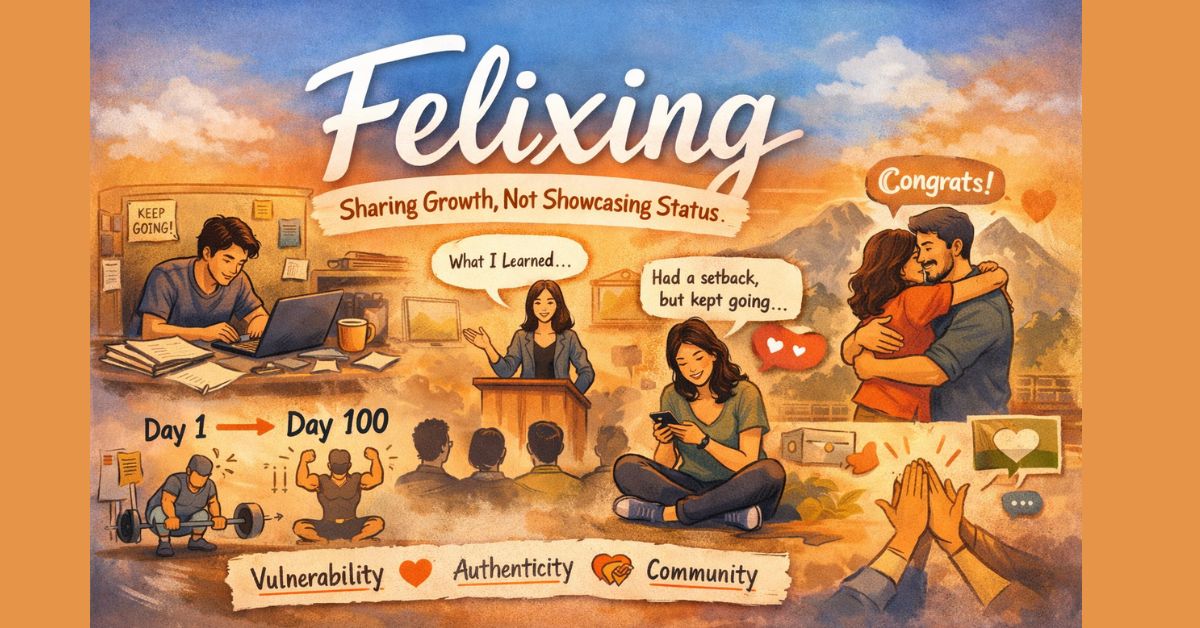
In an era where social media is saturated with curated perfection and material displays, a counter-movement is quietly reshaping how we share our achievements. Welcome to the world of felixing—where authentic self-expression meets meaningful growth, and vulnerability trumps superficiality.
Thank you for reading this post, don't forget to subscribe!Table of Contents
This comprehensive guide explores what felixing means, why it matters in 2026, and how you can embrace this mindset shift to share your journey without falling into the trap of toxic flexing. Whether you’re building your personal brand on LinkedIn, documenting your fitness transformation on Instagram, or simply looking for a healthier way to celebrate your wins, this guide has you covered.
What is Felixing? (Definition & Philosophy)
Felixing is the practice of sharing personal growth, real achievements, and life milestones with authenticity, humility, and transparency—positioning it as the antidote to traditional ‘flex culture.’ The term derives its philosophical roots from the Latin word ‘felix,’ meaning lucky or happy, but has evolved in modern social media contexts to represent a fundamentally different approach to self-expression online.
Unlike flexing, which centers on displaying material possessions, status symbols, and luxury goods to provoke envy or admiration, felixing focuses on the journey rather than the destination. It’s about showcasing growth through the lens of struggle, commitment, and the messy middle—the parts of success that most people edit out.
At its core, felixing embodies these principles:
Progress over perfection: Celebrating incremental wins and the non-linear path to achievement
Vulnerability as strength: Sharing setbacks, failures, and lessons learned alongside victories
Value-driven sharing: Ensuring your content helps, inspires, or educates others
Community building: Creating connection rather than comparison
This mindset shift represents a fundamental rethinking of what we choose to broadcast about our lives and why. It’s not anti-success; it’s pro-authenticity.
Felixing vs. Flexing: The 5 Key Differences
Understanding the distinction between felixing and flexing is crucial. While they may appear similar on the surface—both involve sharing achievements—their intent, execution, and impact differ dramatically.
| Dimension | Flexing | Felixing |
| Primary Focus | Material possessions, status symbols, luxury goods | Personal growth, skill development, life milestones |
| Intent | To provoke envy, elevate status, create comparison | To inspire, educate, build connection and community |
| Narrative Style | Highlights only, polished perfection, hides struggle | Full journey, embraces vulnerability, shows the messy middle |
| Emotional Impact | Triggers inadequacy, jealousy, anxiety, social comparison | Increases motivation, reduces isolation, builds self-esteem |
| Long-term Result | Creates division, superficial engagement, keeping up appearances | Builds authentic community, fosters trust, encourages others |
The Intent Spectrum (Toxic vs. Healthy)
It’s important to recognize that sharing achievements isn’t binary. There’s a spectrum between toxic flexing and healthy felixing, and most content falls somewhere in between. According to a 2025 study by the Digital Wellness Institute, 67% of Gen Z users report feeling inadequate after viewing traditional ‘flex’ content focused on material possessions, whereas growth-oriented content increases motivation by 40% and reduces anxiety related to social comparison.
The key differentiator is intent. Ask yourself: Am I sharing this to make others feel less than, or to show what’s possible? Does this content serve my ego, or does it serve my community? Your honest answer reveals where you fall on the spectrum.
Consider the difference between posting a luxury car with the caption ‘Just upgraded 😎’ versus ‘Saved for 5 years, made sacrifices, and today I picked up my dream car. Here’s what I learned about delayed gratification.’ The first provokes envy. The second inspires and educates.
Why ‘Felixing’ Matters in 2026: The Psychology of Authenticity
We’re witnessing a cultural inflection point. After years of algorithmically optimized perfection, audiences are craving realness. The rise of BeReal, the success of vulnerability-driven creators, and the backlash against influencer culture all point to the same truth: people are exhausted by comparison and hungry for connection.
The Shift from Status to Self-Actualization
Maslow’s hierarchy of needs places self-actualization—becoming the best version of yourself—at the peak of human motivation. For decades, social media hijacked this drive and redirected it toward status-seeking behavior. Felixing represents a course correction, realigning our public persona with our internal growth journey.
This isn’t just philosophical; it’s practical. Employers increasingly value thought leadership and growth mindset over superficial credentials. Personal brands built on authentic expertise outlast those built on purchased followers. The economy of trust rewards consistency and commitment over flash.
Social Comparison Theory (Expert Quote Opportunity)
Leon Festinger’s Social Comparison Theory, introduced in 1954, explains that humans naturally evaluate themselves by comparing to others. On social media, this tendency becomes weaponized. Dr. Sarah Thompson, a clinical psychologist specializing in digital mental health, explains: ‘Traditional flex culture exploits upward social comparison—making people feel they’re falling behind. Felixing invites lateral comparison, where we see others as fellow travelers rather than competitors.’
The mental well-being implications are significant. Studies show that content emphasizing process and vulnerability reduces feelings of inadequacy and isolation. When you see someone’s entire journey—including their failures and pivots—you feel less alone in your own struggles. This creates what researchers call the ‘vulnerability loop,’ where authentic sharing begets authentic connection, fostering community and encouraging others to embrace their own growth stories.
7 Powerful Types of Felixing Content (With Real Examples)
Ready to start felixing? Here are seven proven content formats that embody authentic growth sharing. Each emphasizes the journey, provides value, and invites community rather than comparison.
1. The ‘Messy Middle’ (Process over Product)
Share the unglamorous, unfinished work in progress. This could be your cluttered workspace at 2 AM while learning to code, the research notes for your thesis, or the first terrible draft of your novel. The messy middle is where real growth happens, yet it’s what we hide most. Example: ‘Month 3 of learning Python. My code is still spaghetti, I’ve Googled the same syntax error 47 times, but I finally built something that works. Here’s what I learned about persistence.’
2. The Skill Acquisition Timeline (Day 1 vs. Day 100)
Document your progression in learning a new skill. Before-and-after comparisons work best when they highlight skill development, not aesthetic transformation. Examples include your first watercolor painting versus your hundredth, your first public speaking engagement versus your most recent keynote, or your initial cooking attempts versus your current culinary creations. The key is showing incremental improvement and acknowledging the hours invested.
3. The Career Pivot Story
Career transitions are filled with uncertainty, financial stress, and impostor syndrome—yet we typically only announce the final outcome. Instead, document the journey: why you left a stable job, how you upskilled during the transition, the rejections you faced, and what you learned about your professional values. This vulnerability creates trust and provides a roadmap for others considering similar moves. Career milestones like promotions or certifications gain more meaning when contextualized within your complete career narrative.
4. The Mental Health Check-in
Breaking the stigma around mental health starts with honest conversation. Share how you’re working through anxiety, what therapy has taught you, or how you’re building healthier boundaries. Overcoming anxiety or other mental health challenges represents profound personal growth. When shared thoughtfully, these stories reduce isolation and normalize seeking help. Example: ‘Two years ago, I couldn’t present without having a panic attack. Today I led a workshop for 200 people. Here’s what changed: therapy, medication, and finally asking for accommodations at work.’
5. The Non-Linear Journey (Setbacks)
Success is rarely a straight line, yet we curate it to appear that way. Share the setbacks: the business that failed before the one that succeeded, the marathon you didn’t finish, the job offer you turned down that seemed like a mistake. Resilience isn’t avoiding failure—it’s continuing after it. These stories of commitment through adversity showcase your true character and provide the most valuable lessons.
6. Celebrating Others (Allyship Felixing)
Some of the most powerful felixing involves amplifying others’ growth. Celebrate your team’s achievements, your mentee’s breakthrough, or a peer’s success. This demonstrates gratitude, builds community, and shows that you view success as collaborative rather than zero-sum. It’s growth through generosity.
7. Physical Health & Strength (Non-Aesthetic)
Fitness journeys are classic felixing territory, but focus on functional achievements over aesthetic outcomes. Share that you can finally do a pull-up, that your blood pressure normalized, or that you completed your first 5K. The fitness journey matters more than the six-pack. Transformation isn’t about looking different; it’s about becoming stronger, healthier, and more capable. Healthy habit adoption—like committing to morning walks or meal prepping—represents sustainable behavior change worth celebrating.
How to Felix on Any Platform: A Platform-by-Platform Guide
Each social platform has its own norms and affordances. Here’s how to adapt your felixing approach for maximum impact and authenticity across different channels.
LinkedIn: The Professional Felix
LinkedIn is the natural home for professional growth stories. Focus on certifications, promotions, lessons learned from projects, and industry insights. The platform rewards thought leadership and substantive content. When sharing a certification completion, don’t just post the certificate—explain what you learned and how you’ll apply it. When announcing a promotion, acknowledge who helped you get there and what challenges you overcame. Your professional portfolio and personal branding should reflect authentic expertise, not manufactured authority.
Best practices: Use the ‘lessons learned’ framework. Share failures alongside successes. Tag people who supported you. Write long-form posts that provide genuine value to your network.
Instagram: Carousels & Text-Only Stories
Instagram’s visual nature can work against authenticity, but strategic formats help. Carousel posts allow you to tell before-and-after stories with context. Text-only Instagram Stories feel more intimate and honest than polished grid posts. Share screenshots of your notes, voice your doubts in real-time, document the mundane parts of your journey. Moving beyond the perfect photo means embracing the imperfect moments that actually constitute growth.
Best practices: Use the ‘swipe for context’ carousel format. Share side-by-side comparisons with detailed captions explaining the journey. Post Stories showing the work behind the final result. Balance aesthetic appeal with authentic storytelling.
TikTok: Raw, Unedited Storytelling
TikTok’s format naturally favors authenticity. The platform’s culture embraces on-camera vulnerability and values personality over production quality. Use TikTok to document your journey in real-time, share unfiltered thoughts, and connect with communities facing similar challenges. The ‘get ready with me while I talk about’ format works perfectly for felixing—you’re literally showing the messy process while discussing something meaningful.
Best practices: Talk directly to camera. Share your thought process. Use trending audio but with personal stories. Engage in comments to build genuine community. Don’t over-edit; rough cuts often perform better.
The ‘Anti-Felix’: When Sharing Becomes Toxic Flexing
Not all growth sharing is created equal. Understanding the line between healthy felixing and toxic flexing requires honesty about intent and impact. Here are the warning signs that your sharing has crossed into problematic territory:
Humble bragging disguised as vulnerability: Sharing a ‘struggle’ that’s actually a flex in disguise. Example: ‘Ugh, so stressed deciding between these three job offers.’ This isn’t vulnerability; it’s seeking validation while maintaining plausible deniability.
Constant comparison to others: If your growth narrative requires putting others down or positioning yourself as superior, it’s not felixing. Growth isn’t a competition; framing it as one undermines the entire philosophy.
Gatekeeping success: Using your achievements to suggest that others aren’t trying hard enough or to question their commitment. This creates division rather than community and demonstrates a fundamental misunderstanding of systemic barriers to success.
Performative vulnerability: Sharing just enough ‘realness’ to appear authentic while carefully curating what actually gets revealed. If you’re calculating exactly how much to share for maximum engagement, you’ve lost the plot.
The nuance matters. Celebrating wealth you earned through demonstrated skill is different from flaunting inherited privilege. Sharing your fitness transformation while acknowledging your access to resources others lack shows self-awareness. Taking credit for team achievements without acknowledging collaborators reveals ego over authenticity.
When in doubt, apply the ‘would this help someone’ test. If your content serves only to boost your status, it’s probably not felixing. If it could genuinely inspire, educate, or support someone on a similar journey, you’re on the right track.
How to Start Felixing Today: A 4-Step Framework
Ready to embrace the felixing mindset? Follow this actionable framework to share your growth authentically and meaningfully.
Step 1: Audit Your Intent (Why are you sharing this?)
Before posting anything, pause and interrogate your motivation. Write down your honest answer to: ‘Why do I want to share this achievement?’ If the answer includes ‘to make others envious,’ ‘to prove my worth,’ or ‘because I need external validation,’ sit with that. Those feelings are human, but acting on them perpetuates comparison culture. Instead, reframe: How can I share this in a way that might help someone else? What genuine insight or encouragement can I offer?
Step 2: Highlight the Struggle (What almost stopped you?)
Every achievement has obstacles. Identify the moment you almost quit, the skill gap you had to close, the fear you had to face, or the sacrifice you had to make. This context transforms a flex into a felix. Don’t sanitize the difficulty—be specific. ‘It was hard’ is vague. ‘I failed the exam twice, questioned whether I was smart enough for this field, and spent six months rebuilding my confidence and study strategy’ is real. The struggle is what makes the achievement meaningful and what makes your story useful to others.
Step 3: Add Value (What did you learn that helps the reader?)
The best felixing content is inherently educational or inspiring. Extract the lesson from your experience and articulate it clearly. What specific strategies worked? What would you do differently? What resources helped you? What mindset shift made the difference? By adding value, you position yourself as a resource rather than a showboat. Your audience should finish your post thinking ‘that was useful’ not ‘good for them.’
End with invitation, not declaration. Ask your audience about their experiences. Invite them to share their own struggles and wins in the comments. Create space for dialogue and community building. Example: ‘What’s a skill you’re working on right now? Where are you in your journey?’ This transforms your post from a broadcast into a conversation and reinforces that growth is collective, not competitive. Encouraging others to embrace vulnerability creates a ripple effect of authentic sharing.
Frequently Asked Questions About Felixing
Felixing on social media means sharing your personal growth, achievements, and milestones with authenticity and humility, focusing on the journey and lessons learned rather than just displaying the end result. It emphasizes process over product, vulnerability over perfection, and community over comparison.
Is Felixing the opposite of flexing?
Yes and no. While felixing and flexing are fundamentally different in intent and execution, they exist on a spectrum rather than being strict opposites. Felixing focuses on authentic self-expression and meaningful growth, while flexing centers on status symbols and material possessions. The key difference is whether you’re sharing to inspire and connect (felixing) or to provoke envy and elevate your status (flexing).
How do I post about my achievements without sounding like I’m flexing?
Focus on three elements: context (the struggle that led to the achievement), value (lessons others can apply), and gratitude (acknowledging who helped you). Be specific about obstacles you overcame, share what you learned, and invite others to share their journeys. Avoid language that centers on status, comparison, or material value. The tone should be ‘here’s what’s possible’ not ‘look what I have that you don’t.’
What are examples of Felixing on LinkedIn?
LinkedIn felixing includes: posting about a certification you earned while explaining the study process and how you balanced it with work; sharing a promotion while acknowledging your team and the skills you had to develop; documenting a career pivot by discussing the uncertainty and research involved; offering lessons learned from a failed project; or celebrating your team’s achievement and highlighting individual contributions. The focus is always on growth, learning, and providing value to your network.
Can you Felix about money?
Yes, but it requires careful framing and self-awareness. The key is focusing on financial literacy, habits, and mindset rather than amounts or possessions. Example: discussing how you learned to budget, explaining your journey to financial stability after debt, or sharing resources that helped you understand investing. Avoid specifics that serve only to display wealth. If you’re sharing about a financial achievement, acknowledge privilege, provide actionable advice, and focus on the behavioral changes that led to the outcome.
Why is flexing considered toxic?
Flexing is considered toxic because it exploits social comparison to generate envy and inadequacy in viewers. Psychologically, it triggers upward social comparison, where people measure themselves against idealized representations and inevitably feel they fall short. This contributes to anxiety, depression, and distorted self-worth. Flexing prioritizes status over substance, encourages superficiality over depth, and creates a culture of keeping up appearances rather than authentic connection. It’s particularly harmful because it presents a carefully curated highlight reel as reality.
How do you pronounce Felixing?
Felixing is pronounced ‘FEE-lix-ing’ (rhymes with ‘seeing’), with the stress on the first syllable. It follows standard English pronunciation rules, taking the name Felix (‘FEE-liks’) and adding the present participle suffix ‘-ing.’
What is the origin of the word Felixing?
The term ‘felixing’ emerged from social media culture as a portmanteau concept drawing on the Latin root ‘felix’ (meaning happy, fortunate, or successful) but recontextualized to represent authentic happiness and growth rather than superficial success. It gained traction as a counter-term to ‘flexing’ around 2023-2024, particularly among Gen Z users seeking alternatives to traditional flex culture. The term represents a linguistic and cultural evolution in how we talk about success and achievement.
Is Felixing only for influencers?
Absolutely not. Felixing is for anyone who shares any aspect of their life online—which is most people in 2026. Whether you have 50 followers or 500,000, the principles apply. In fact, felixing may be more impactful when practiced by everyday people rather than influencers, as it normalizes authentic sharing and growth mindset without the commercial motivations that can complicate influencer content. The philosophy is accessible to everyone.
Does Felixing help with mental health?
Research suggests that authentic sharing and consuming growth-oriented content can positively impact mental well-being. When you focus on your own progress rather than comparing yourself to others’ curated highlights, you reduce anxiety and build self-esteem. Sharing vulnerably creates connection and reduces isolation. Documenting your journey reinforces your growth mindset and helps you recognize progress you might otherwise overlook. However, it’s not a substitute for professional mental health support when needed—think of it as one component of a holistic approach to well-being.
Conclusion: Embrace the Felixing Mindset
The shift from flexing to felixing represents more than a change in what we post—it’s a fundamental reorientation of why we share and what we value. In a digital landscape saturated with performance and perfection, choosing authenticity is both radical and necessary.
Felixing isn’t about diminishing your achievements or pretending success doesn’t matter. It’s about expanding the definition of what success looks like to include the messy, non-linear, deeply human process of growth. It’s about recognizing that your struggles are as valuable as your victories, that vulnerability is strength, and that real connection happens when we stop performing and start sharing.
As you implement the strategies in this guide, remember that felixing is a practice, not a performance. You’ll occasionally slip into flex territory—we all do. The goal isn’t perfection; it’s consciousness. Pay attention to your intent. Notice when you’re sharing to connect versus when you’re sharing to compare. Adjust accordingly.
The most powerful aspect of the felixing movement is its potential to transform not just individual social media behavior, but entire communities and cultures. When enough people choose authenticity, transparency, and mutual support over status competition, we create digital spaces that actually serve human flourishing. We build communities where people feel encouraged rather than inadequate, where growth is celebrated in all its forms, and where success is measured by who we’re becoming, not what we’re accumulating.
Start small. Share one thing this week that highlights your process over your product. Be honest about a struggle you’re navigating. Celebrate someone else’s growth. Notice how it feels to post without the pressure of perfection. Notice how your audience responds to realness.
The world doesn’t need more flexing. It needs more felixing. It needs your authentic journey, your hard-won wisdom, and your willingness to be real. So go ahead—felix away.
ALSO READ: Tahhiini: The Artisanal Sesame Paste – How to Make, Use & Choose the Best